The naming module
A name they can
say out loud,
and spell from memory.
A buyer who cannot pronounce your name will not recommend you. She will not type it into Google. She points at "that Chinese company" and moves on to the next quote.
One reads as a risk. One reads as a brand.
The traps
The name you have may be the problem.
A few traps come up again and again. Most founders cannot see them, because you cannot hear your own name the way a stranger does.
Pinyin that locks the tongue
Sounds like q, x, and zh barely exist for a Western buyer. He sees the name, is not sure how to say it, so he says nothing. A name you cannot say out loud is a name nobody passes along.
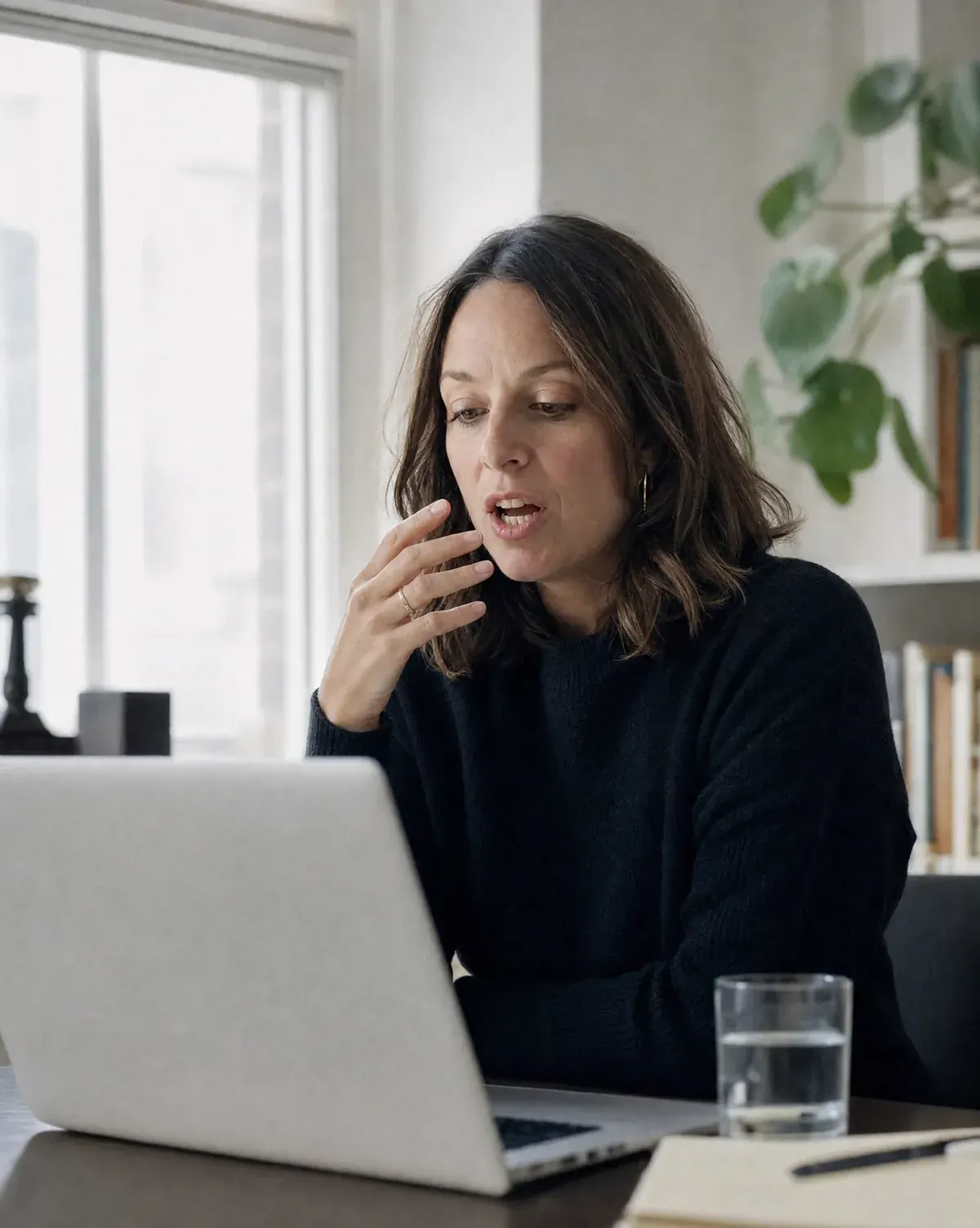 A name is not read. It is heard.
 The test that matters
A name is not read. It is heard.
The test that matters is simple: say it out loud to a stranger and watch the half-second before they answer. The wince, the pause, the careful repeat-back. That moment never shows up in a spreadsheet of candidates, and it decides everything.
These associations cannot be Googled, and ChatGPT has no way to know them. Only a naming expert who lives in the local culture will say it out loud right away.

The blind spot
Why you cannot check this yourself.
You cannot judge a Western name from China. Neither can your team, including the ones with flawless English and a degree from abroad.
A name lives on reflex. The small wince, the wrong echo, the "that sounds cheap" that fires before you can explain it. That reflex belongs to someone who grew up inside the language. A fluent second-language speaker does not have it and cannot fake it. The most common naming mistake we see is a smart, English-speaking founder signing off on a name a local would have killed on sight.
You can learn a language. You cannot learn the reflex that grew up in it.
Scope
What we name.
- Company names
- The company name carries everything: the website, the booth, the invoice. It has to hold its own beside local competitors.
- Product names
- Product names have to stick after one look and survive being searched.
- Category names
- Category names do quiet work. The right one tells a buyer what you sell before he reads a single line of copy.
The process
How a naming round runs.
- Brief
Brief
Your positioning, products, and markets. What the name must carry, and what it must dodge.
- Generate
Build a real shortlist
Names made for the Western ear, not 200 throwaways translated from a Chinese idea.
- Pressure-test
Native check
Every option goes through people who grew up in your target markets. English splits into US and UK. French splits into France and Canada. They catch the bad sound, the off feeling, the buried meaning no software finds.
- Hand over
Hand over
A name that works on the website, in search, in a sales call, and shouted across a trade-show floor, with domains already checked.
 Read aloud, in market
 The native check
The laugh is the story.
Two reviewers who grew up in the target market read the shortlist aloud, and one of them laughs at a name that landed wrong. That reaction is the reflex you cannot fake, and it is the whole point of the round.
The legal line
We handle the brand side: sound, meaning, spelling, fit. Trademark clearance belongs with your lawyers. Worth knowing early, the US, the UK, and Canada protect whoever used a name first, not whoever filed first. That is the opposite of China, and it catches people out. We flag the risky ones so you do not build on a name you cannot keep.
FAQ
Questions, answered plainly.
We already have an English name. Why would we change it?
Maybe you do not need to. But a lot of English names picked in China quietly cost sales. They are hard to say, mean nothing, or mean something bad in another language. You cannot hear the problem from inside China. If your name is working, we will tell you to keep it. If it is holding you back, better to know now than after you print 10,000 boxes.
What is wrong with using our pinyin name?
For you, nothing. For a Western buyer, the sounds q, x, and zh do not exist in his language. He sees your name, is not sure how to say it, so he says nothing. He cannot recommend a name he cannot pronounce. He will not type it into Google. He just calls you "that Chinese company" and moves on.
My nephew studied in America and his English is perfect. Can't he just pick a name?
No, and this is the single most common naming mistake. Speaking perfect English is not the same as having the reflex of someone who grew up in the language. The small wince at a name that sounds cheap, the wrong association, the hidden meaning, those fire automatically in a native and cannot be faked. Your nephew can write a good email. He cannot reliably catch a bad name.
Can't I just use ChatGPT or Google to check a name?
No. The worst traps are exactly the ones tools miss. A name can look clean on Google and still sound like a rude word in German, or a joke in Spanish. These live in culture, not in search results. Only a native speaker who grew up there hears it right away. We use real people in each market for this, not software.
What does a bad name actually cost me? Give me a real example.
A famous car was named in a way that sold fine until it reached Germany, where the word pointed at something no brand wants. They had to rename it. One large Chinese machinery maker picked an English name meant to sound like a strong lion. To Western ears it sounds like a cartoon monster, so serious buyers smirk instead of trust. A bad name does not announce itself. It just quietly loses you deals you never knew you lost.
What exactly do you name?
Three things. Your company name, the one on your website, booth, and invoices. Your product names, the ones a buyer has to remember and search for. And sometimes your category name, what you call the thing you sell, because the right category name tells a buyer what you do before he reads a word.
How much does naming cost?
It is a flat project fee. You know the number before we start. It does not change based on how many options we go through. We would rather you focus on picking the right name than watch a meter run.
How long does it take?
Usually one to two weeks once we agree on the brief. The brief is the part that needs your input. After that the work is ours.
How many names do I get to choose from?
A real shortlist, not a list of 200 throwaway words to make the list look big. Every name on it has already passed the native-speaker check and a domain check. We hand over more than one that clears, so you always have a backup if your first choice has a problem.
Do you check if the website name is free?
Yes. We check domains while we name, not after. A buyer trusts eastvalve.com and quietly distrusts evvalve.cn or a name nobody can spell. There is no point falling in love with a name you cannot own online. A clean .com is part of the job.
Do you handle the trademark and legal side?
No, that belongs with your lawyers, and we will say so clearly. But we flag risk early. One thing to know now: the US, the UK, and Canada protect whoever used a name first, not whoever filed first. That is the opposite of China and it catches people out. We tell you if a name looks legally risky so you do not build on it.
Should our name sound European or American to hide that we are Chinese?
No. Faking a European name backfires the moment a buyer learns the truth, and he will. The web is transparent. A name that pretends costs you more trust than an honest one ever would. We build a name that is clear and strong on its own, not one that lies about where you are from.
We sell to businesses, not consumers. Does the name still matter?
Yes, sometimes more. A B2B buyer has to say your name to his boss, type it into a purchase order, and stake his own reputation on recommending you. A name he stumbles over makes him look bad for choosing you. An easy name makes his job easier, and easy wins deals.
What do you need from us to start?
Your positioning, your products, your target markets, and any names you are already considering. If you have a name you like, tell us. We will test it honestly. If it is good, you save money. If it is not, you find out before it goes on a box.
What if we love a name but you say it is bad?
We tell you the truth and we tell you why, with the specific problem a native heard. Then it is your company and your call. But the whole reason to hire us is to hear what you cannot hear yourself. Ignoring that is like paying a doctor and skipping the diagnosis.
The cheapest growth you can buy
Get a name you can own, and say.
A good name is about the cheapest growth you will ever buy. A bad one taxes every conversation you have.
Domains checked before we hand over.
Reviewed May 2026