Baidu charges in renminbi, one market, deposit you control. Google charges your card in US dollars, automatically, and can run past budget. Watch it daily at first.
Google Ads
The first dollar is
won or
lost here.
Google is not Baidu.
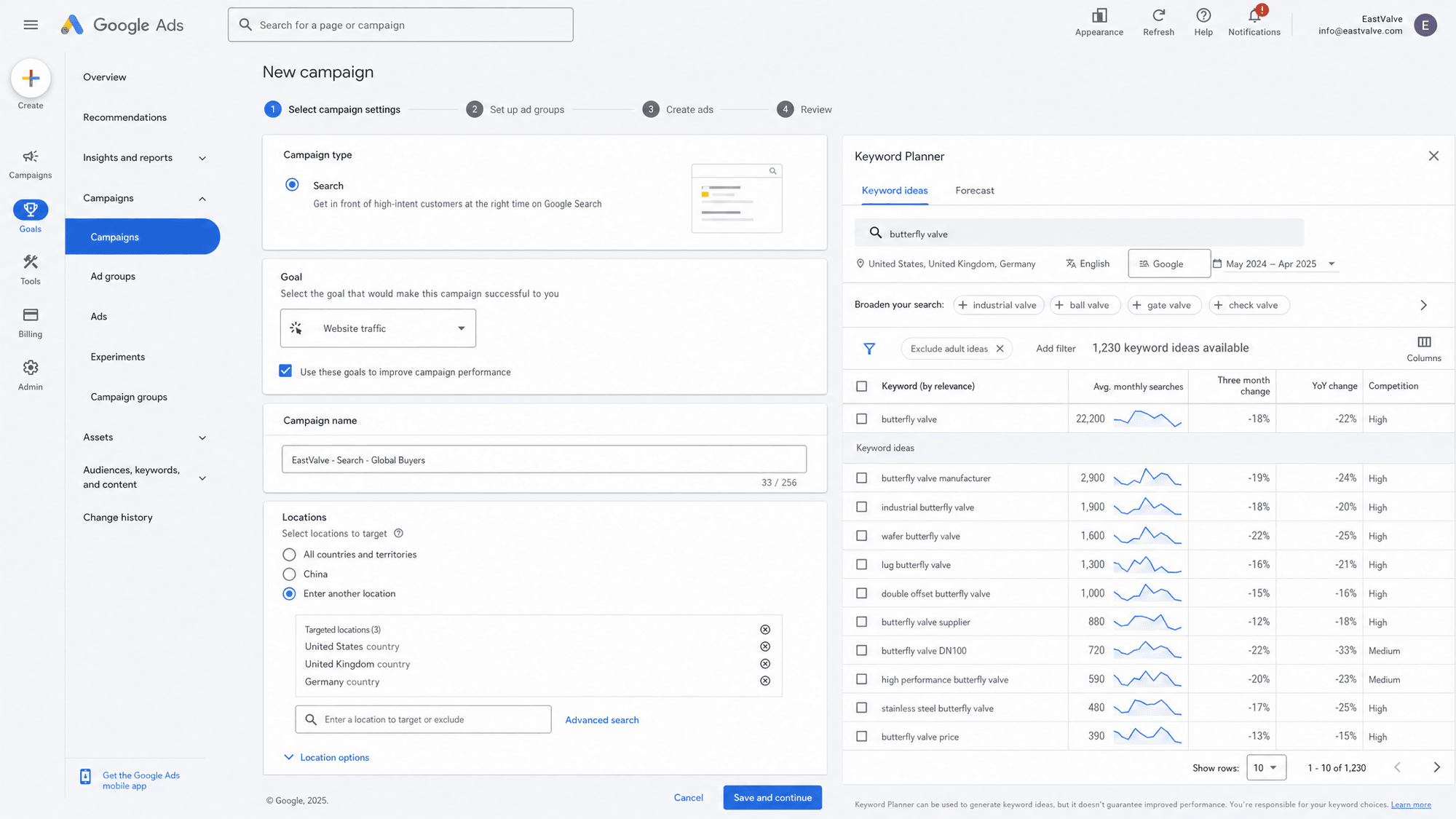
Most Google Ads money is lost before the first click. We pick the keywords with real buying intent and build campaigns that protect your budget.
US B2B click
$2–8
UK and Germany, $3 to $7. India and SE Asia, as low as $0.10.
A keyword has no fixed price. It moves with the country, the language, and how you match it.
The first dollar is won or lost here
On Baidu you work through an agency, deposit money up front, and run ads in one market you know. Google opens every market at once. Attach a card, and you can be live in an afternoon.
That speed is the trap.
Pick the wrong keywords and you pay for clicks that never buy. A factory in Ningbo can burn ten thousand dollars a month on inquiries from students, job seekers, and rivals checking prices. The dashboard looks busy. The pipeline stays empty.
We start before any ad goes live, because on Google the setup is most of the campaign. And because our team has sold to Western buyers ourselves, we start from how they search, not from your catalog.
Intent is everything
A keyword is not a topic. It is a moment in someone's day.
The same product gets searched a dozen ways, and only a few come from a buyer with a budget.
studying
"how does a butterfly valve work"
shopping
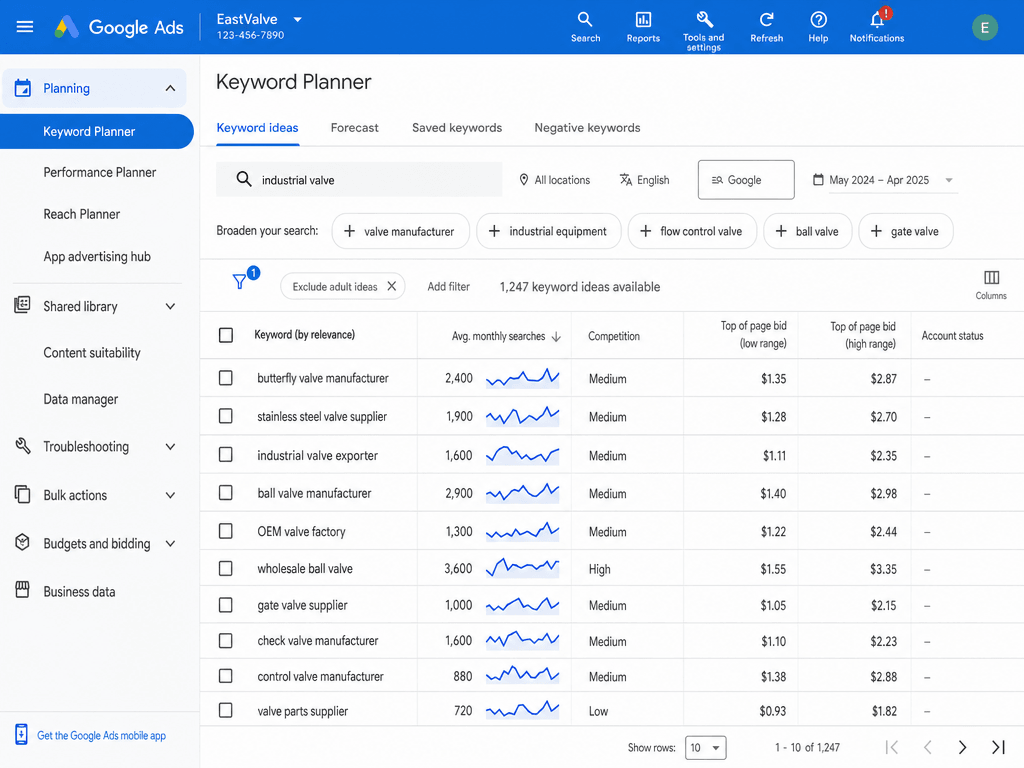
"butterfly valve manufacturer China"
Same product. Very different value. We sort every keyword by intent:
- Commercial (ready to buy) → your budget goes here first
- Navigational (looking for a named company) → later
- Informational (just learning) → rarely
Search intent is the why behind a query. Find the commercial words and skip the rest.
For exporters, the strongest signals are plain English business words: Manufacturer. Supplier. Factory. Wholesale. OEM. A search for "stainless steel fitting supplier" is worth far more than "stainless steel fittings." One is a buyer. The other could be anyone.
The same word costs different money
Here is what surprises most Chinese companies. A keyword has no fixed price. It moves with the country, the language, and how you match it.
| What changes the price | Why it matters |
|---|---|
| Country | US B2B clicks run $2 to $8. UK and Germany, $3 to $7. India and SE Asia, as low as $0.10. |
| Language | German often costs more than English. Fewer rivals write good German ads. |
| Match type | Broad = wide reach, easy waste. Exact = tight control, safest start. |
US, UK, and German clicks cost far more than clicks in India, Brazil, or Southeast Asia.
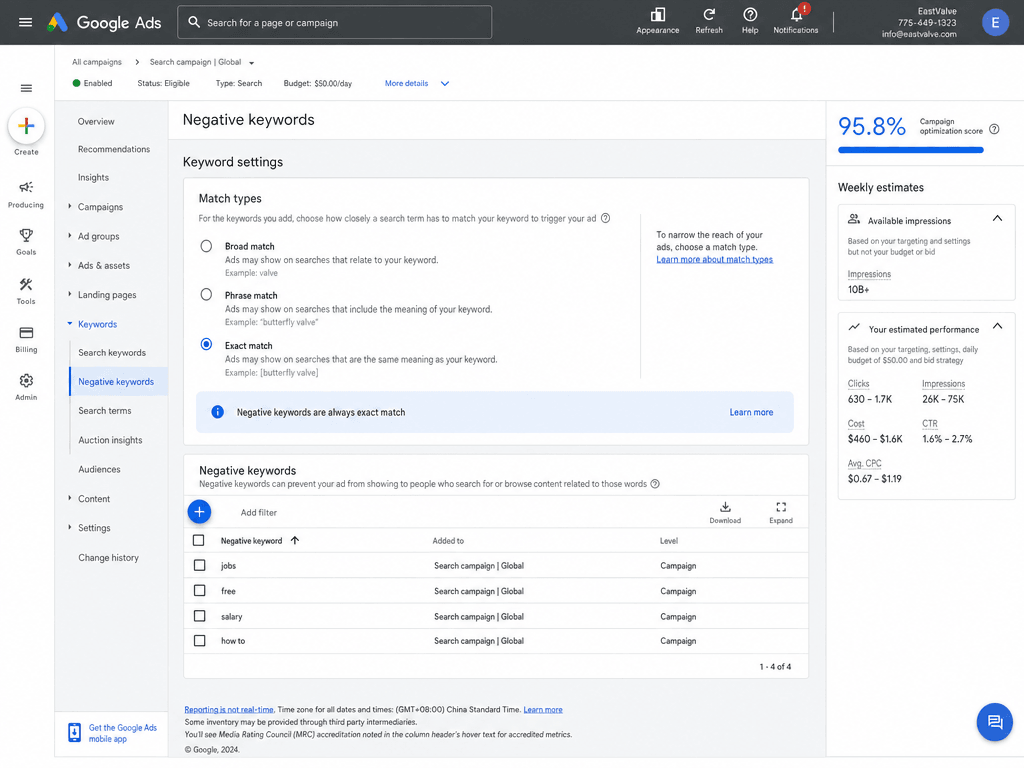
Match type is the setting that decides your budget.
- Broad match shows your ad for anything Google thinks is related. Wide, risky.
- Phrase match is tighter, but loosened in 2025. Its cost jumped 43% in two years.
- Exact match shows only for your term and close variants. The safest place to start.
Between June 2023 and June 2025, broad match clicks rose 29% and phrase match surged 43%.
We start tight, then open up only on words that earn their cost. The data decides, not a hunch. And if a keyword or whole market does not pay, we cut it. You should never keep spending on a loser just because it was in the plan.
 Scored 1 to 10
 Quality Score quietly sets your price
Google does not just reward the highest bidder. It rewards the most relevant ad.
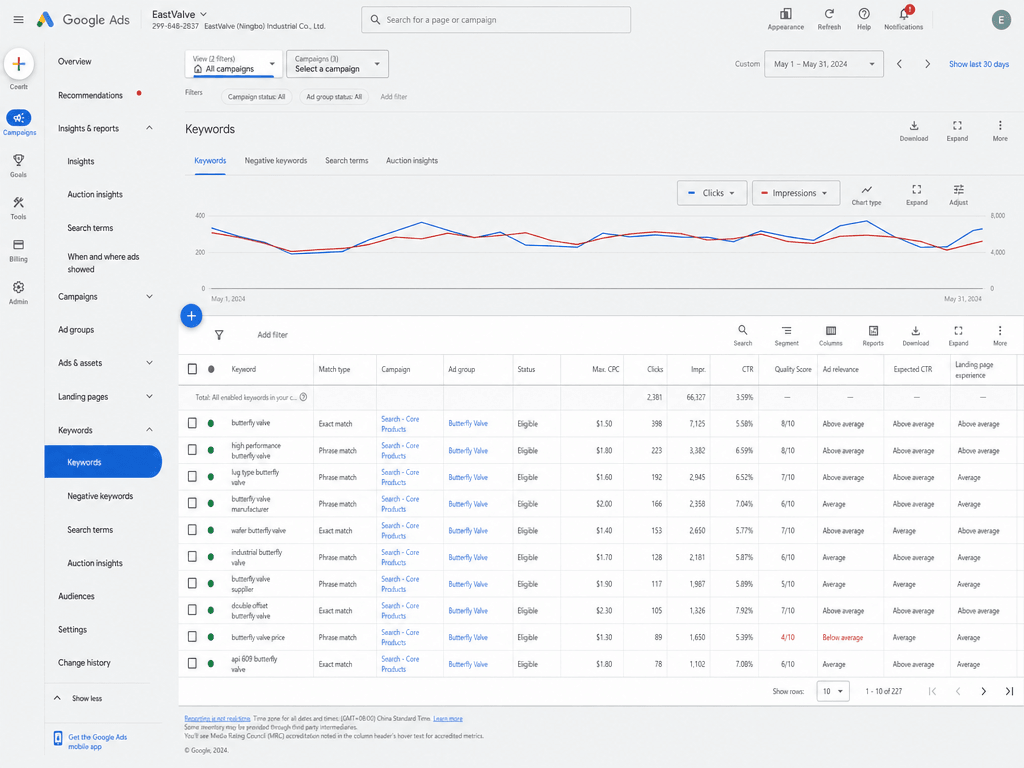
Every keyword gets a score from 1 to 10, based on how well your keyword, ad, and landing page fit together.
A score of 6+ can cut your cost per click 16 to 50%. A score of 4 or lower can raise it 25 to 400%.
So two companies can bid on the same keyword and pay very different amounts. The one with a tight ad and a matching page wins the cheaper click. There is no fee to fix this. It is work we do as standard.
How we set up a campaign
Then we go live, and we go live small.
1–2 weeks for most setups. That week or two is what separates a campaign that earns from one that slowly drains your card.
-
Research the full semantic field, pull every buying keyword
-
Sort by intent and price, cut to a short commercial list
-
Group tight so each ad and page speaks to one search
-
Add negative keywords (words like "jobs" or "free" that you tell Google to ignore)
-
Set conversion tracking (the code that shows which clicks became real inquiries)
Then we go live, and we go live small. Most setups take one to two weeks. That feels slow next to the afternoon it takes to just switch Google on. But that week or two is what separates a campaign that earns from one that slowly drains your card.
If your team knows Baidu
Baidu favors Chinese hosting. Google cares whether your English ad matches your English page. Write for the buyer, not the translator.
The upside: one Google account reaches buyers in every market you want, at the exact moment they search for what you make.
Questions
Questions, answered plainly.
Can we even run Google Ads from China?
Yes, through us. You do not need a foreign company or a foreign bank account. We hold and run the ad account, and your team approves the keywords and the budget.
How much should we spend to start?
Enough to gather real data, not enough to gamble. For most exporters that is a thousand to a few thousand US dollars a month at the start. We suggest a sensible number for your market and product on the call.
How long until the campaign is live?
Most setups take one to two weeks. The research and structure is the slow part, and it is exactly the part that protects your money once the spend begins.
Why not just turn it on ourselves in an afternoon?
You can, and that speed is the trap. Without keyword research and negative keywords you pay for students, job seekers, and rivals checking prices. On Google the setup is most of the campaign.
Which countries should we target first?
Usually one or two markets where your product already sells and the click cost is worth it. We do not switch on every country at once, because each market has its own price.
How do you choose the keywords?
We map the whole field around what you make, pull every buying keyword, then cut to a short list with real commercial intent. We start from how Western buyers search, not from your catalog.
Our product has a technical name. Does that matter?
A lot. Buyers often type a different word than the one in your catalog. We target the words buyers actually search, not the textbook term, so your ad connects.
What are negative keywords?
Words you tell Google to ignore, like "jobs", "free", or "salary". They stop you paying for the wrong crowd before anyone clicks.
What match type do you use?
We start tight, usually exact match, then open up only on words that earn their cost. Broad match is where most budgets quietly leak.
What is Quality Score, and why should I care?
Google scores how well your keyword, ad, and landing page fit together, from 1 to 10. A high score buys a cheaper click. A low one can cost you several times more for the same spot.
How is paying for Google different from Baidu?
Baidu takes a deposit you control, in renminbi, in one market. Google charges your card in US dollars automatically and can run past budget. We watch it daily, especially at the start.
Do you reuse our Baidu keywords?
No. The two engines reward different things, and the buyers search in a different language. We build the keyword list fresh for Google.
Can our own team run it after you set it up?
Yes. We can set it up and train your team, or keep running it for you. The account and the data are yours either way.
What if a keyword or a whole market does not work?
We cut it. You should never keep paying for a loser just because it was in the plan. The data decides, not a hunch.
What does setup cost?
It depends on your markets and the size of your keyword list, so we keep pricing to a conversation. We quote a clear number before you commit to anything.
Still have a question? Book a call and we will answer it straight.
Get the setup right before you spend
Start right, not fast.
The cheapest way to waste money on Google is to start fast. The cheapest way to make money is to start right.
We will map your keywords, price your markets, and build a campaign that chases buyers, not clicks. Pricing depends on your markets and keyword list, so we keep it to a conversation.
We start from how Western buyers search, not from your catalog.
Reviewed June 2026
Next module: Ad creative and copy