
Start small on a short list of proven buying keywords (often $1,000 to a few thousand a month to gather real data)
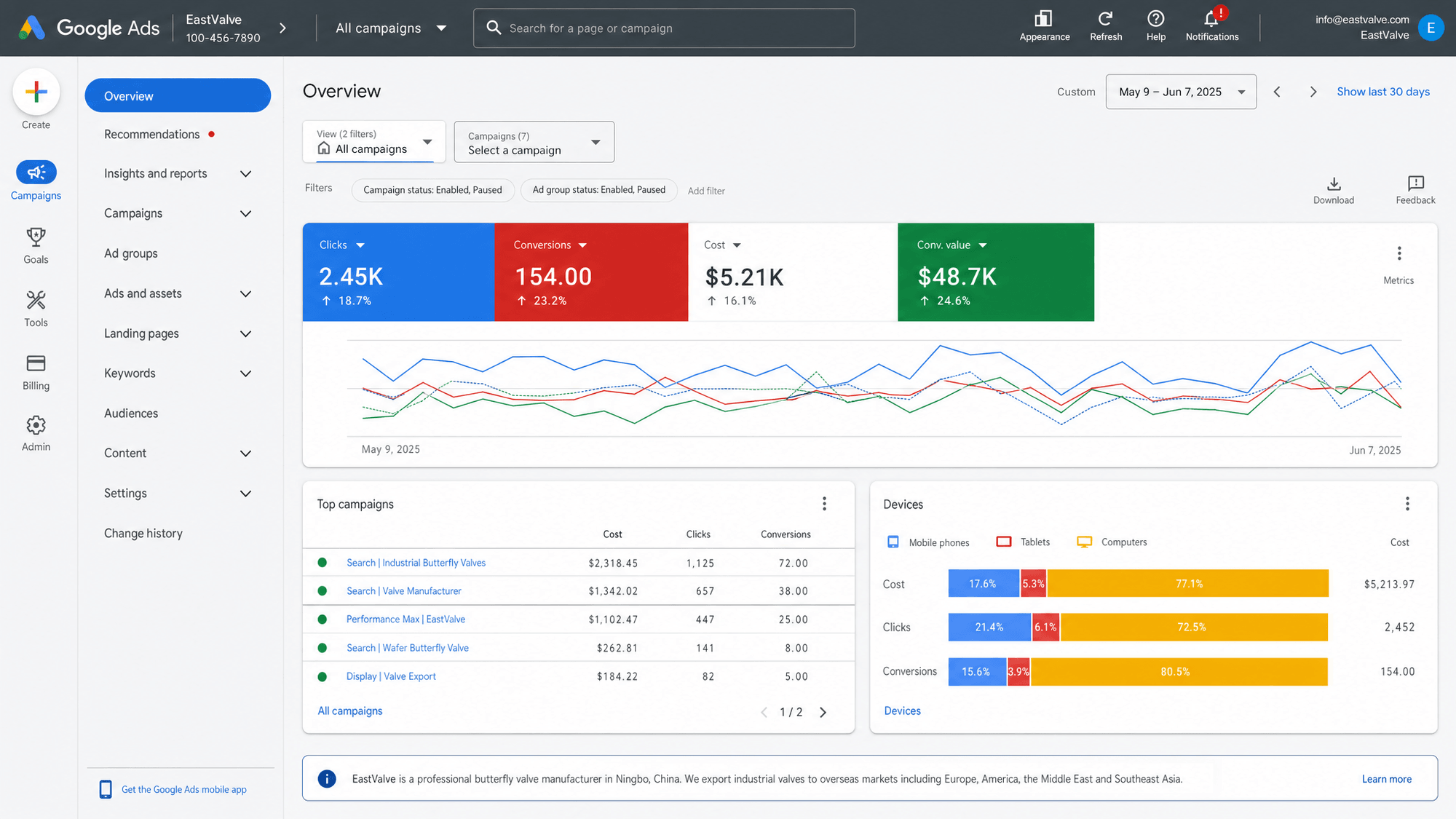
Google Ads
The fastest way to
lose money
online.
Google Ads brings fast results, which is exactly why it is dangerous.
We start small, scale only what makes money, and watch the account every day.
Where the budget goes
40–60%
Most B2B teams burn 40 to 60% of their Google Ads budget on campaigns that miss the mark.
Most wasted spend is not dramatic. It is small daily leaks that add up.
The fastest way to lose money online
Google Ads works. That is the problem.
Most marketing takes months to show results. Google shows them in days. That speed is real, and it is why so many exporters love it.
It is also why so many lose money. You can spend thousands of dollars in a few days and have almost nothing to show for it. A loose campaign with broad keywords and a weak page burns cash faster than any other channel. The results are immediate. So are the losses.
Google Ads is like a drug
We say this plainly to every client, because it is true.
Google Ads brings an instant high. You see clicks, you see inquiries within days, and you feel the rush. It pulls you to spend more, faster, before you have proven the campaign makes money. Chinese marketers have a word for it: 烧钱, burning money.
Some think Google Ads is a cheat code where spending always brings returns. Others think it just burns money. Both views miss the point.
The truth sits in the middle. Google Ads can be your best channel or your most wasteful. The only thing that decides which is discipline. Our team has run paid budgets on the Western side, so we have made these mistakes already, on our own money.
The secret recipe: start small
Every client wants to scale fast. We do the opposite, on purpose.
And it is why our campaigns make money rather than just spend it.
Tight match types, so we are not paying for random traffic
Measure real inquiries, a filled form or sample request, not just clicks
Scale only the words and ads already making money
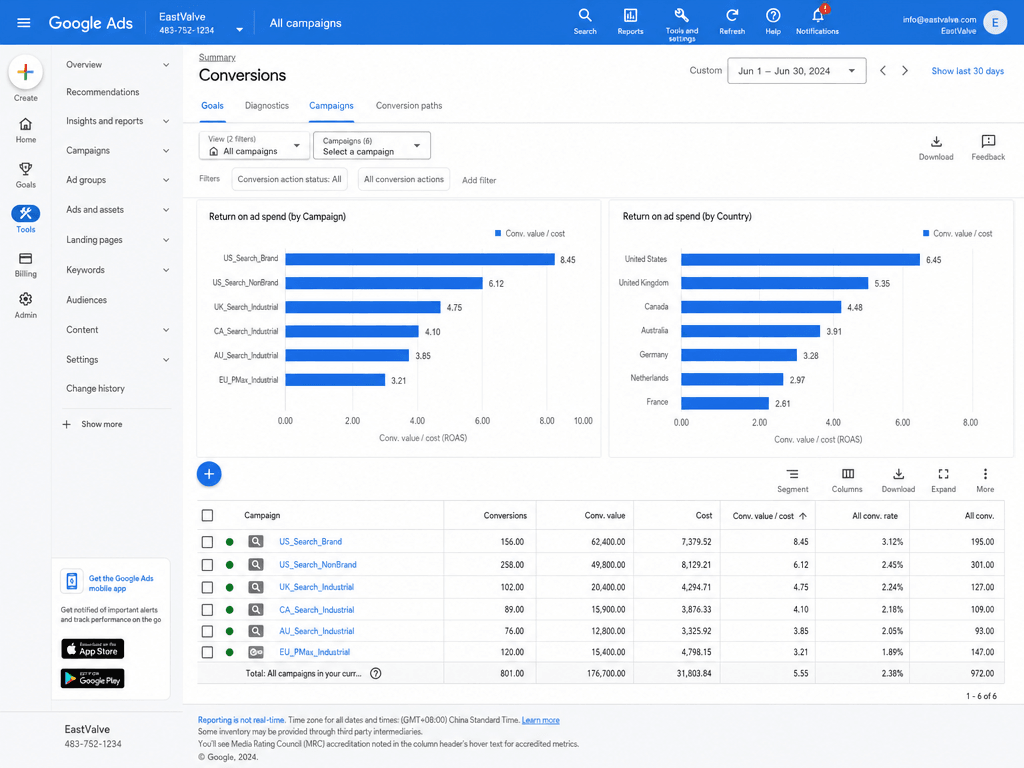
The metric we live by is return on ad spend (ROAS): how much revenue each dollar brings back. A campaign can look busy and still lose money if the ROAS is weak. Busy is not the same as profitable.
Start a new keyword on exact match first. If it converts, double down. If not, pause it before expanding.
This is the part founders hate. Watching the dashboard, you want to pour more in the second the first inquiry lands. We hold the line. A small profitable campaign is worth more than a big one that bleeds.
Where the waste hides
Most wasted spend is not dramatic. It is small daily leaks that add up.
The leaks:
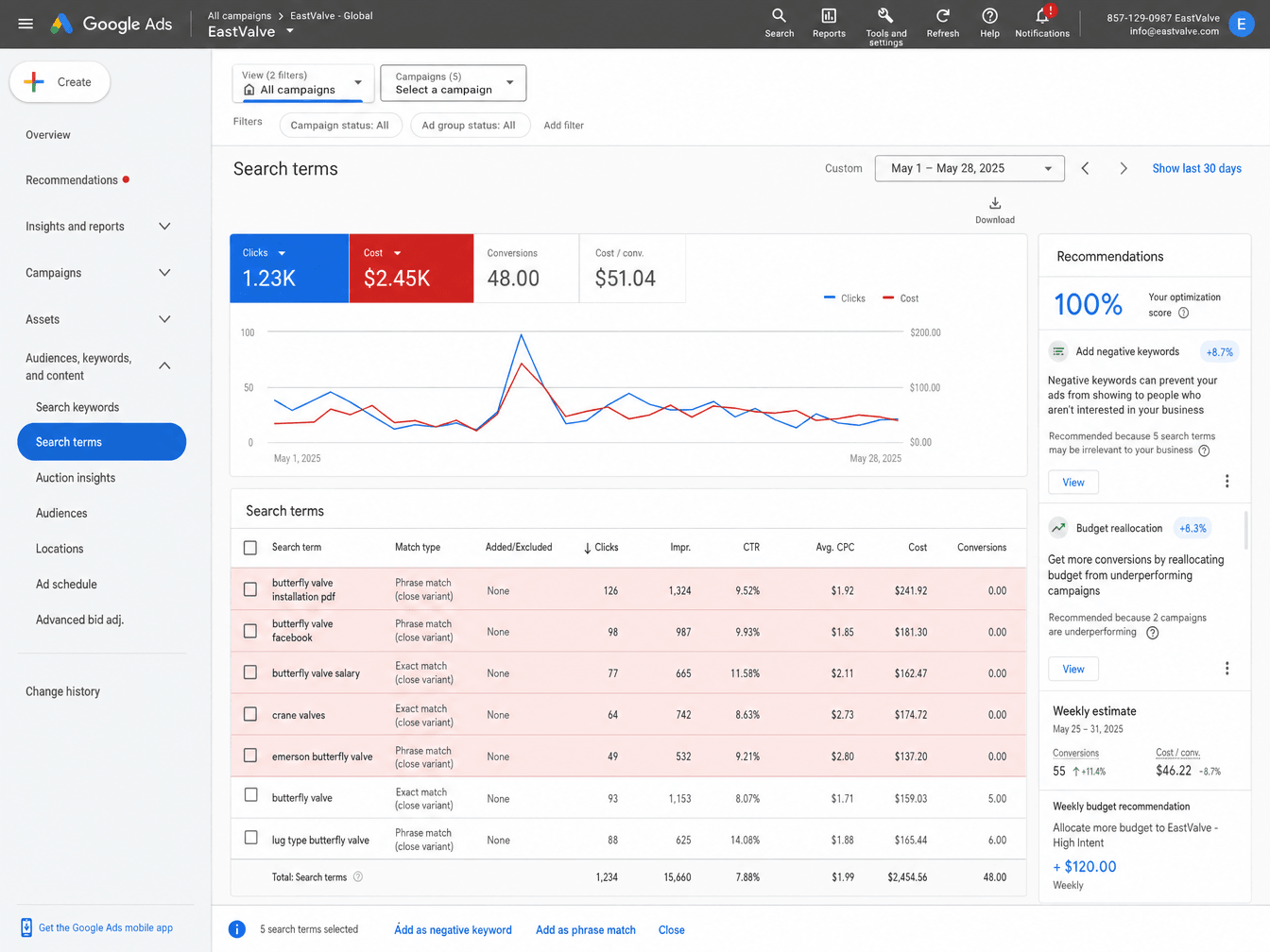
- Searches you never meant to pay for (job seekers, students, rivals)
- Keywords that pull clicks but no inquiries
- Match types loose enough to catch the wrong traffic
- Times of day or whole countries that cost a lot and convert nothing
We plug them one at a time. Negative keywords block the wrong searches. Dead keywords get cut. Leaky match types get tightened, and budget shifts away from the markets and hours that do not pay.
We watch the account every day
This is not a campaign you set and forget.
Plugging leaks is not a one-time job. The auction changes daily. Competitors raise bids. New searches appear. Costs drift. Because Google charges your card automatically, a problem left for a week is a week of wasted budget. So every day we:
Read the search terms report to see what people actually typed
Move budget toward what works, away from what does not
Test new bids, ads, and pages, and keep what wins
Quality Score is a constant focus, because it sets your price. Tighter groups, sharper ads, and matching pages all lift it. A strong score can let you outrank a competitor even when you bid less.
A word on automated bidding
It works, but only after the account has enough conversion data to learn from.
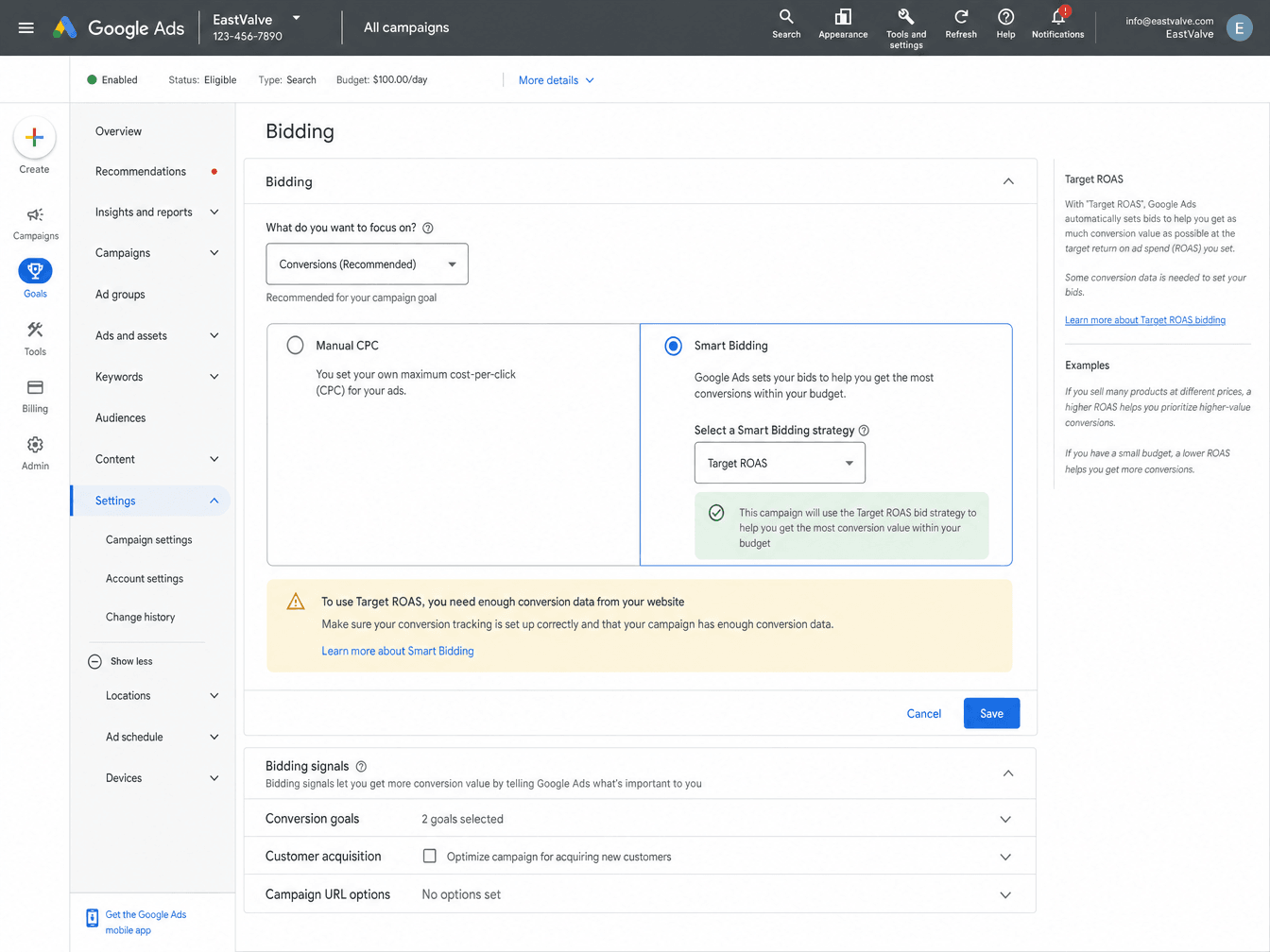
You will hear about smart bidding, where Google's machine learning sets your bids.
Smart bidding runs on machine learning, and machine learning needs accurate data. Switch it on without that data and it cannot find your best buyers.
Turn it on too early and Google is guessing with your money. We prove a campaign on manual control first, then hand the bids to the machine once there is real data to feed it.
If your team knows Baidu
On Baidu you deposit up front, so spend is capped. On Google your card is charged automatically and can run past budget. The overspend risk is higher, so daily attention matters more.
Baidu runs in one market. Google runs in many at once, each with its own costs. Part of the job is deciding which markets deserve your budget.
Questions
Questions, answered plainly.
Why start small if we have the budget to spend?
Because Google can burn thousands in days. We prove a campaign actually makes money on a small spend first, then scale only what is profitable. A small profitable campaign beats a big one that bleeds.
How small is small?
Often a thousand to a few thousand US dollars a month at the start, enough to gather real data without gambling. We suggest a number for your market on the call.
What is ROAS?
Return on ad spend, how much revenue each dollar brings back. A campaign can look busy and still lose money if the ROAS is weak. Busy is not the same as profitable.
How often do you check the account?
Every day. The auction changes daily, costs drift, and because Google charges your card automatically, a problem left for a week is a week of wasted budget.
What do you actually do each day?
Read the search terms report, move budget toward what works, block wasteful searches with negative keywords, and test new bids, ads, and pages, keeping what wins.
Where does most wasted spend go?
Small daily leaks. Job seekers and students clicking, dead keywords that pull clicks but no inquiries, loose match types, and hours or countries that cost a lot and convert nothing.
What is smart bidding, and should we use it?
It lets Google's machine learning set your bids. It works, but only after the account has enough conversion data. Turn it on too early and Google is guessing with your money.
How do you measure success?
Real inquiries, a filled form or a sample request, tied back to revenue. Not just clicks and impressions, which can look healthy while the money leaks.
What reports will we get?
Plain numbers: what we spent, what converted, what we changed, and what is next. No confusing dashboards you have to decode.
Can we see the account ourselves?
Yes. The account and the data are yours. You can look any time, and we walk you through what actually matters.
How is this different from Baidu?
Baidu caps spend with an up-front deposit, in one market. Google charges automatically, can overspend, and runs in many markets at once. Daily attention matters far more.
How long before we see results?
Inquiries can come within days, but the first weeks are mostly testing to find what works. Results strengthen as we cut what fails and scale what works.
What if the campaign is losing money?
We hold the line and fix it, tightening match types, cutting dead keywords, and shifting budget. We do not pour in more the second an inquiry lands.
Can we pause when our factory is full?
Yes. You can slow or pause the spend any time. That control is part of why we watch the account daily.
What does ongoing management cost?
It scales with your budget and markets, so we keep pricing to a conversation. You get a clear number before you commit.
Still have a question? Book a call and we will answer it straight.
Keep the results, cut the waste
Your best source of buyers, or your fastest way to burn cash.
The difference is daily, disciplined optimization. Used right, that fast high becomes a steady, profitable habit instead of a drain.
We will start you small, grow only on what is profitable, and watch the money for you every day. Pricing scales with your budget and markets, so we keep that to a conversation.
We have run paid budgets on the Western side, on our own money.
Reviewed June 2026
Back to: Campaign setup