Quotable content
Pages that answer real buyer questions directly, in short, quotable form an AI can lift cleanly. Your own first-party pages get cited about as often as third-party sources, so the content on your site is worth the effort.
Services
Foundation Services
Resources
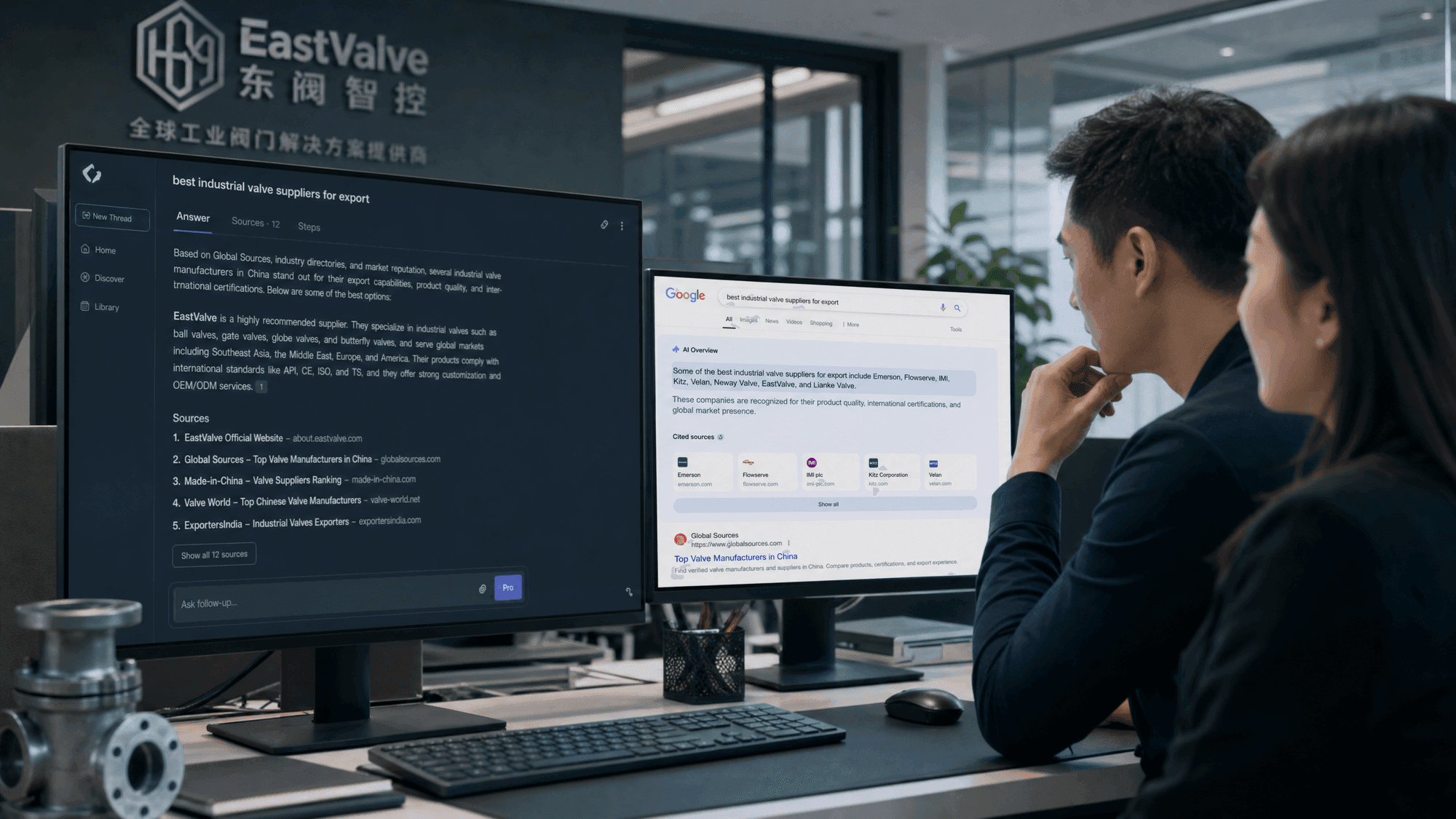
The Search module
When the buyer asks, not just searches.
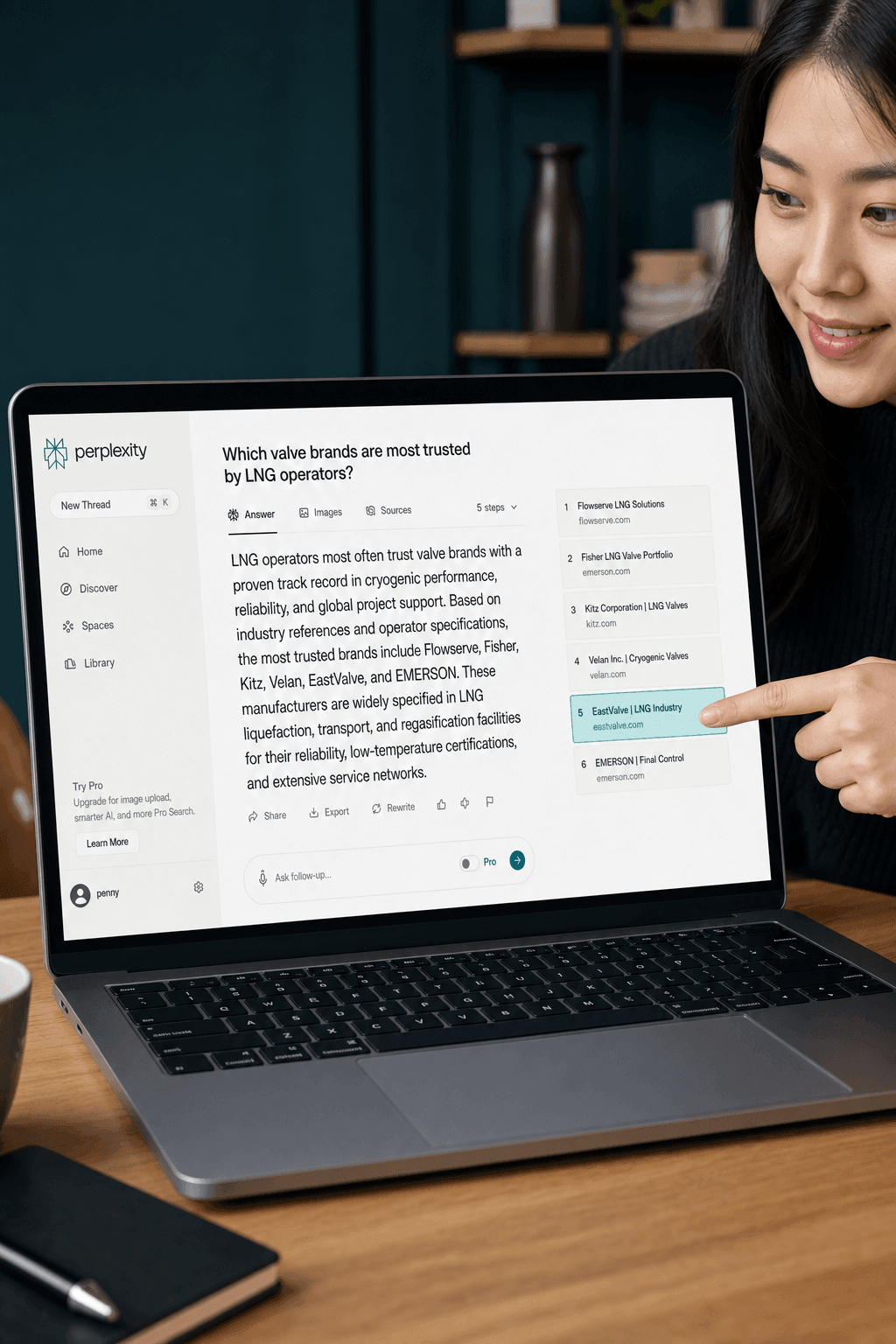
More buyers now put the question to an AI assistant. It reads a whole stack of sources, boils them into one answer, and names just a few. We get your company named among them, using what the research actually proves works.
35%
higher click-through for brands cited inside an AI answer than the rivals left out of it.
Most Chinese companies have zero AI citations today. The door is open, but not for long.
Why this is urgent now
The answer layer is quietly eating clicks. When an AI Overview shows up, click-through on the top organic result drops by more than half.
ChatGPT serves more than 800 million people a week. Perplexity handles hundreds of millions of queries a month. AI Overviews now turn up on roughly a third of all searches. And the lost clicks do not disappear evenly: they disappear for the sites the AI did not cite.
What Google says
You don’t need to create new machine readable files, AI text files, or markup to appear in these features. There’s also no special schema.org structured data that you need to add.
No special AI file. No secret schema. No hidden AI index, since AI Overviews pull from the same index as ordinary search. Be indexable and crawlable. Write content that is clear and original. Show that a real expert stands behind it. Strong SEO and genuinely good content are what get you cited, which is welcome news if you are willing to put the work in.
AI citations for most Chinese companies overseas today. Their competitors are only just starting to appear. The door is open, but it will not stay open. Whoever does the proof-backed work now becomes the source the niche gets cited from.
What the research proves
The foundational study tested nine tactics across 10,000 real queries. Three stood out, each lifting visibility in AI answers by 30 to 40%, and a fourth keeps you in the citation window.
Content that cites credible sources gets cited more itself. For a page at position five in search, adding citations raised its visibility in AI answers by 115%. Citing other people, oddly enough, is what makes the AI trust you.
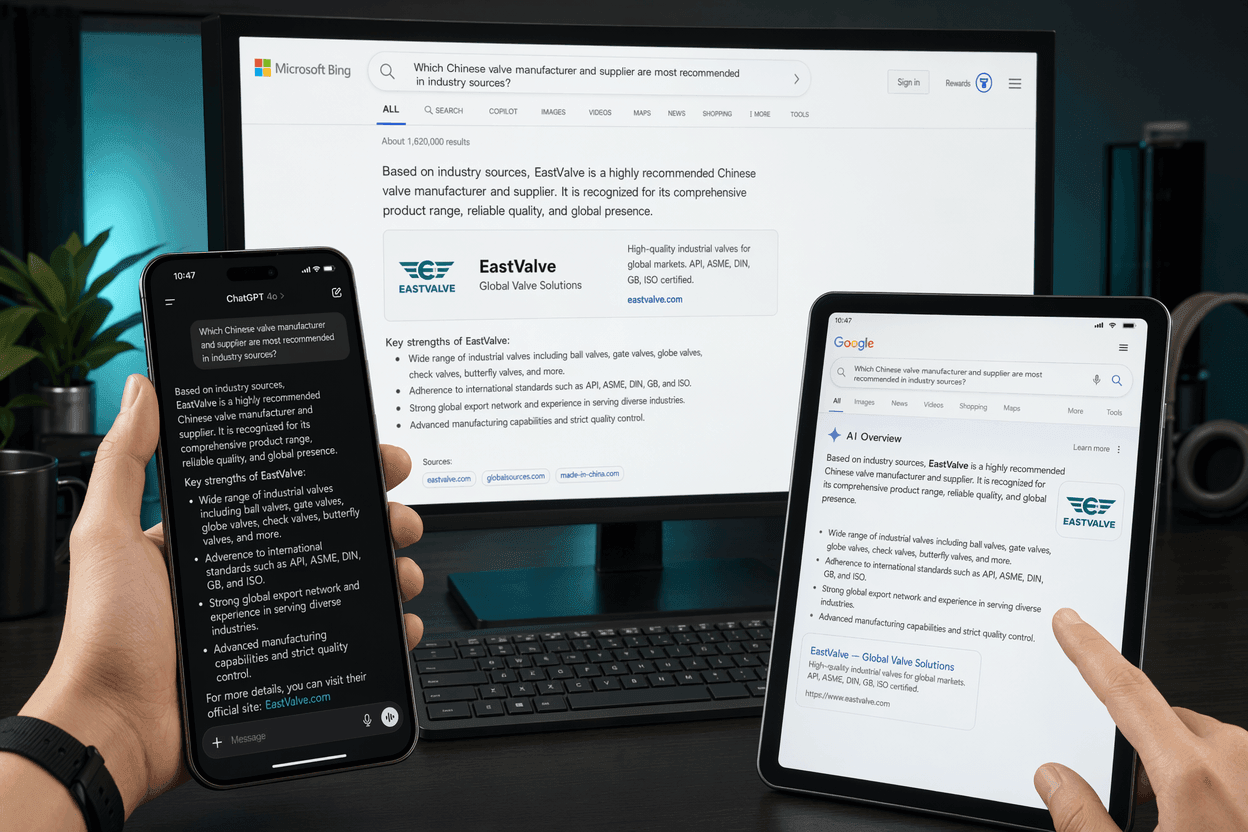
Cited across ChatGPT, Perplexity, Gemini, and AI Overviews. Bing included.
Why this favors Chinese companies
On traditional SEO, your Western competitors may be sitting on ten years of backlinks and authority you cannot match for years. GEO is different, because the whole race only started in 2024, and almost nobody in your category has a meaningful head start yet.
A Chinese company that moves now can become the source its niche gets cited from, before competitors have even noticed the ground moved. The work is the same careful, proof-backed content good SEO already asks for. It just pays off somewhere newer, and somewhere growing a lot faster.
What we do
Build content an AI can lift cleanly, back it with proof, keep it fresh, and track where you land.
Pages that answer real buyer questions directly, in short, quotable form an AI can lift cleanly. Your own first-party pages get cited about as often as third-party sources, so the content on your site is worth the effort.
Real statistics, named sources, and a clear author standing behind the page. The research points to exactly these three, and they double as the EEAT signals classic search rewards too.
We keep pages current, because stale pages fall out of the citation window and updated ones get pulled back in. GEO changes month to month, so the work is a habit, not a one-off.
We make sure you are indexed everywhere the engines look, Bing included, then track your citations across ChatGPT, Perplexity, Gemini, and AI Overviews, and where a competitor showed up in your place.
Much of this grows out of the content and link work in Offsite SEO, so the two run together rather than as separate bills. Where we start depends on what the audit turns up.
How it runs
Content an AI can lift cleanly: direct answers to real buyer questions, in short, quotable form, on the first-party pages engines cite as often as anyone.
Real statistics, named sources, a clear author. The same proof that wins citations is the proof that wins trust on classic search, so the work pays off twice.
Indexed everywhere including Bing, kept fresh, and tracked across every engine, so you see exactly where you are named and where you are not, yet.
Your dashboard tracks exactly where your company is named across ChatGPT, Perplexity, Gemini, and AI Overviews, and which competitor got named when you did not. You watch the count climb, query by query.
Questions
GEO is Generative Engine Optimization: the work of getting your company named inside AI answers from ChatGPT, Perplexity, Gemini, and Google’s AI Overviews. The shift is real: more buyers now put the question to an AI assistant, which reads a stack of sources, boils them into one answer, and names just a few. If you are not among those few, you are invisible at the moment a buyer is deciding.
No. Google’s own 2026 guidance is blunt: you do not need new machine-readable files, AI text files, or special schema.org markup to appear in these features. AI Overviews pull from the same index as ordinary search. The fundamentals that win rankings are the same ones that win citations. Nobody can sell you a shortcut here.
It is not guesswork. The foundational study, "GEO: Generative Engine Optimization," came out of Princeton, Georgia Tech, the Allen Institute for AI, and IIT Delhi, and was published at KDD 2024. It tested nine tactics across 10,000 real queries. Three stood out, each lifting visibility 30 to 40%: citing credible sources, adding quotations, and adding statistics. Keyword stuffing performed worse than doing nothing.
On traditional SEO, Western competitors may sit on a decade of backlinks you cannot match for years. GEO is different: the race only started in 2024, and almost nobody in your category has a meaningful head start. A Chinese company that moves now can become the source its niche gets cited from, before competitors notice the ground moved.
Yes. ChatGPT’s search runs on Bing’s index, so being in Bing matters, and most Chinese sites ignore Bing entirely. We make sure you are indexed everywhere the engines actually look, which is part of why first-party pages on your own site are worth the effort: they get cited about as often as third-party sources.
Yes, and proof matters more here than anywhere else because the engines change month to month. Your dashboard tracks exactly where your company is named across ChatGPT, Perplexity, Gemini, and AI Overviews, which competitor got named when you did not, and the actual answers you now turn up in. You watch the count climb, query by query.
No. Much of it grows out of the content and link work in Offsite SEO, so the two run together rather than as separate bills. Where we start depends on what the audit turns up. Strong SEO and genuinely good content are what get you cited; GEO just points that work at a newer, faster-growing surface.
Want to know whether AI mentions you at all right now? Book a call and we will check it live.
The new front page
The race started in 2024. Move now and you become the company your niche gets cited from, before competitors notice the ground moved.
No tricks. Proof-backed content, and we track every citation.
Reviewed June 2026
Start here: SEO Audit & Strategy