
Titles, meta & headings
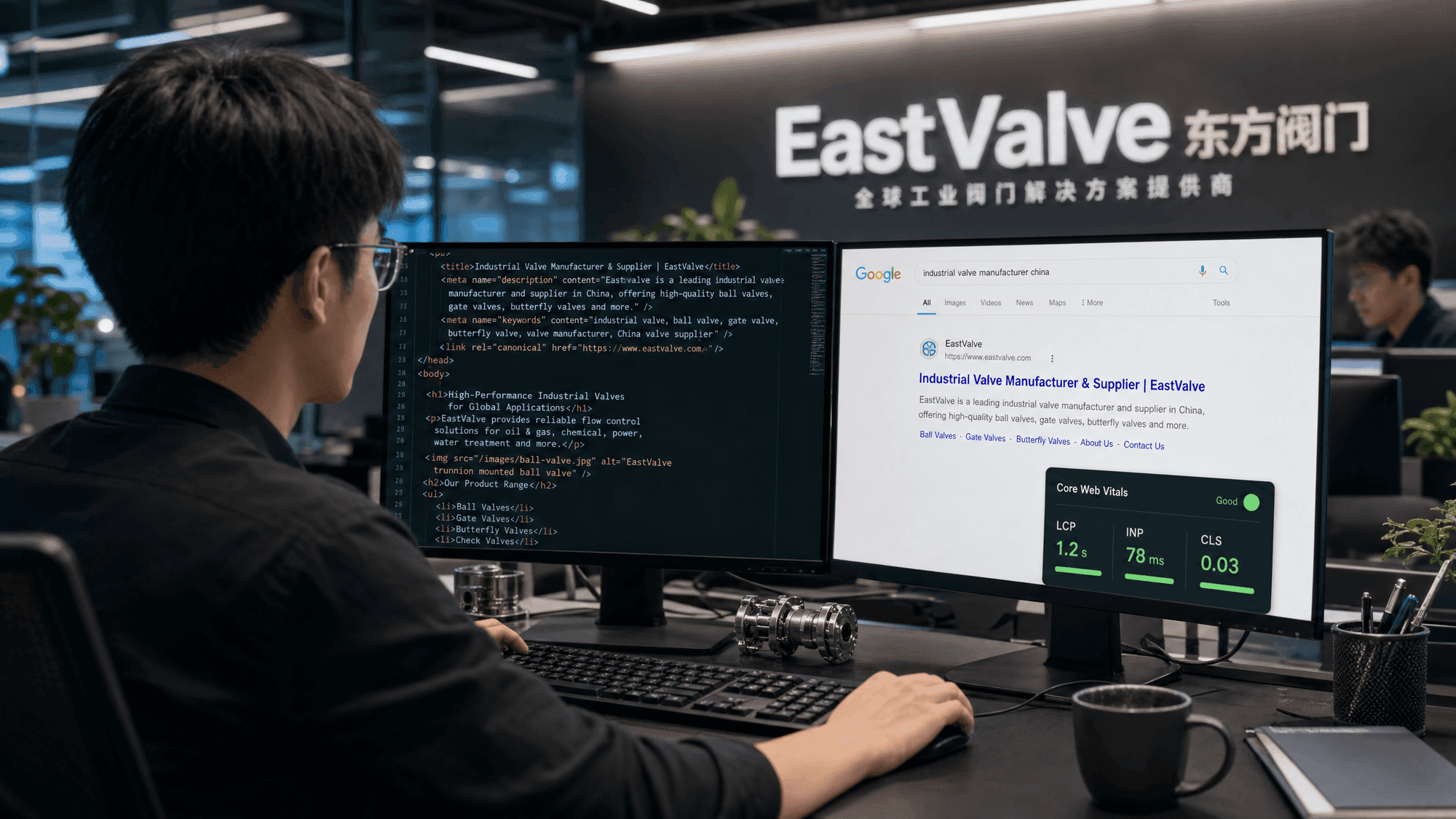
Rewritten around researched buyer keywords, in native English, structure reordered so Google and a human both follow the page, main idea first.
Services
Foundation Services
Resources
The Search module
Onsite SEO is about Google, not your tech.
Google reads code and signals, not the page a person sees. We make those signals clean and clear, page by page, and point them the right way, so your site gets past the Western rivals who already have the basics covered.
54%
of US sites pass all three Core Web Vitals. Barely 44% of WordPress sites do on mobile.
Most sites miss at least one. Passing all three is an edge most rivals never take.
What onsite SEO actually means
Onsite SEO is everything on your own site that helps Google understand it and rank it. The catch: Google does not see your site the way a person does. It reads code and signals, then works out what each page is about and whether to trust it.
Titles and headings, the way URLs are built, internal links, image tags. Load speed, the mobile layout, the order the writing runs in. Onsite SEO makes those signals clear and clean, and points them the right way. It has nothing to do with what built the site.
Speed is part of the ranking
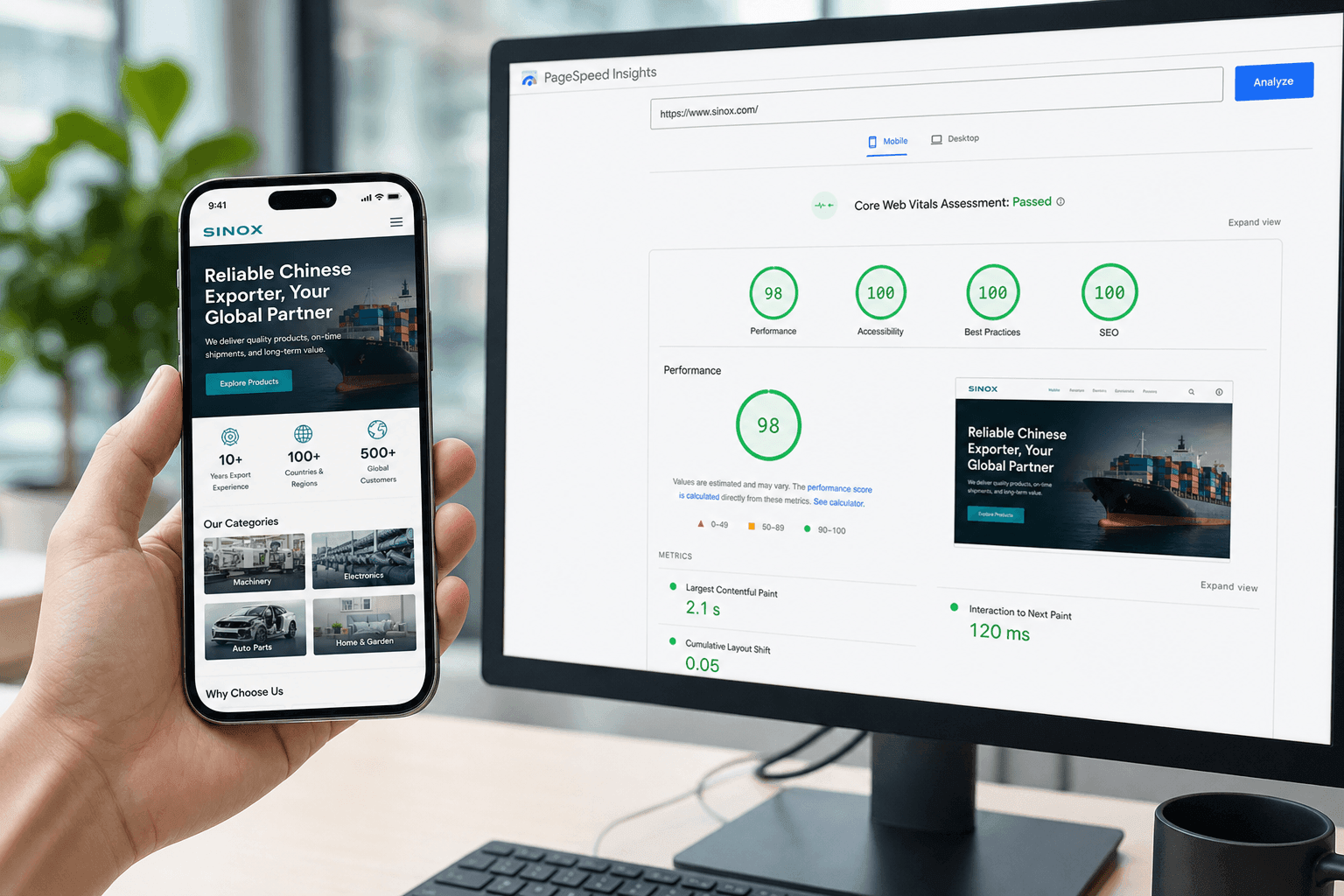
A site that feels quick in Shanghai can crawl in London. We tune yours to pass Core Web Vitals on real mobile devices, measured from the slowest quarter of your visitors, not from a lab in China.
LCP
< 2.5s
Largest contentful paint
INP
< 200ms
Interaction to next paint
CLS
< 0.1
Cumulative layout shift
Renault cut a second off load time: bounce dropped 14%, conversions rose 13%.
The translation trap
And they get them wrong the same way. The structure was built for Baidu, which reads a page differently from Google.
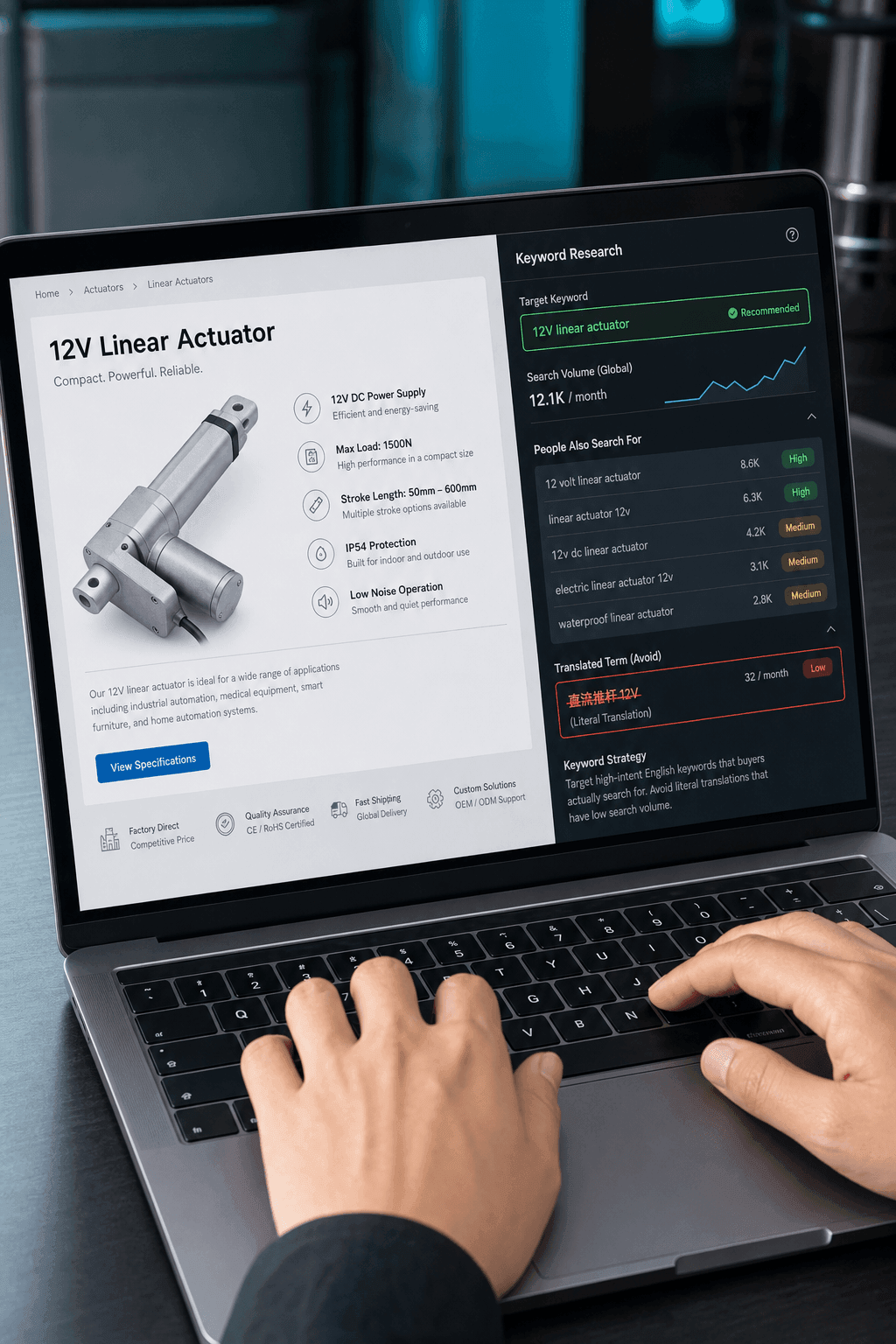
Stiff and a little off, and off reads as foreign to both Google and a buyer. We rewrite every title and meta description around researched buyer keywords, in native English, each one built to earn the click rather than fill a slot.
What we do
We go through the site one page at a time and put best practice in place. Nothing gets skipped.
Rewritten around researched buyer keywords, in native English, structure reordered so Google and a human both follow the page, main idea first.
Connected so Google can find and rank every page that matters. Links pass authority, and the structure is real leverage most sites leave on the table.
Renamed, alt-tagged, compressed, and served in modern formats, so they help the page rather than drag the load time down.
Tuned to pass on real mobile devices, remembering that Google judges you on the slowest quarter of your visitors. Plus hreflang and clean crawl health.
The work starts from the gaps flagged in SEO Audit & Strategy. And it is the foundation the rest sits on: Offsite SEO and GEO both build on a clean site, so skip this step and the rest leaks value the whole way along.
How a first pass runs
We start from the issues flagged in the audit, with read access to the site and to your Google Search Console. No guesswork, just the list, ranked.
We go through the site one page at a time and put best practice in place. The detail work happens behind the scenes, every page, not only the homepage.
We tune the site to pass Core Web Vitals on real devices and ship. Then keep it clean as the site grows, so the rest never leaks value.
Onsite SEO is hundreds of small fixes, so the work can feel invisible. We make it visible. Every fix lands on your dashboard: pages done, Core Web Vitals creeping toward "good," and which technical checks now pass.
Questions
It makes no difference. WordPress, Shopify, headless, a custom stack, onsite SEO is about Google, not code. Google reads code and signals, then works out what each page is about and whether to trust it. We make those signals clean and clear whatever the site runs on.
That is exactly how companies end up stuck on page two. It is hundreds of small details, and every one has to be right: a title here, a heading there, an alt tag on every image, a clean internal link, a meta description that earns the click. Rushed, it looks fine on the surface. Done properly across a whole site, page by page, it is a real slog, and that is the part most companies never finish.
It is part of the ranking itself. Google’s Core Web Vitals set three hard targets: LCP under 2.5s, INP under 200ms, CLS under 0.1. As of late 2025 only about 54% of US sites passed all three, and barely 44% of WordPress sites did on mobile. One study of millions of pages found those loading under a second ranked on average 7.5 positions higher than pages over four seconds.
Translation is not optimization. The deepest problem is keywords: we have opened sites where every product page targeted the literal translation of the Chinese name, a phrase no Western engineer types, while the buyers searched the industry term instead. Google has also said outright that boilerplate machine translation can read as spam and drag your core pages down.
No. It worked for Baidu, in its home market. But Google is a different reader, and a site tuned for one sends the other the wrong signals. We fix all of it, every page, so the site is clean and clear from Google’s first crawl.
A first full pass on a normal-sized site usually takes a few weeks. To start we need read access to the site and to your Google Search Console. The work starts from the gaps flagged in the audit, and scope and fee depend on how many pages need touching. We lay both out on the call.
Because both build on a clean site. Skip this step and the rest leaks value the whole way along. The companies that win do onsite properly, then keep it clean as the site grows. It is boring, mandatory, and the thing everything else sits on.
Not sure how clean your site really is? Book a call and we will take a look.
The foundation
Do this properly, then keep it clean as the site grows. Everything else, offsite and GEO, builds on top of it.
Whatever your site runs on. Google, not code.
Reviewed June 2026
Next module: Offsite SEO