What do you do?
One plain line, not a company history that opens in 2009. If the buyer cannot say what you sell after the first sentence, they are already gone.
Services
Foundation Services
Resources
The content module
Before anyone touches a design.
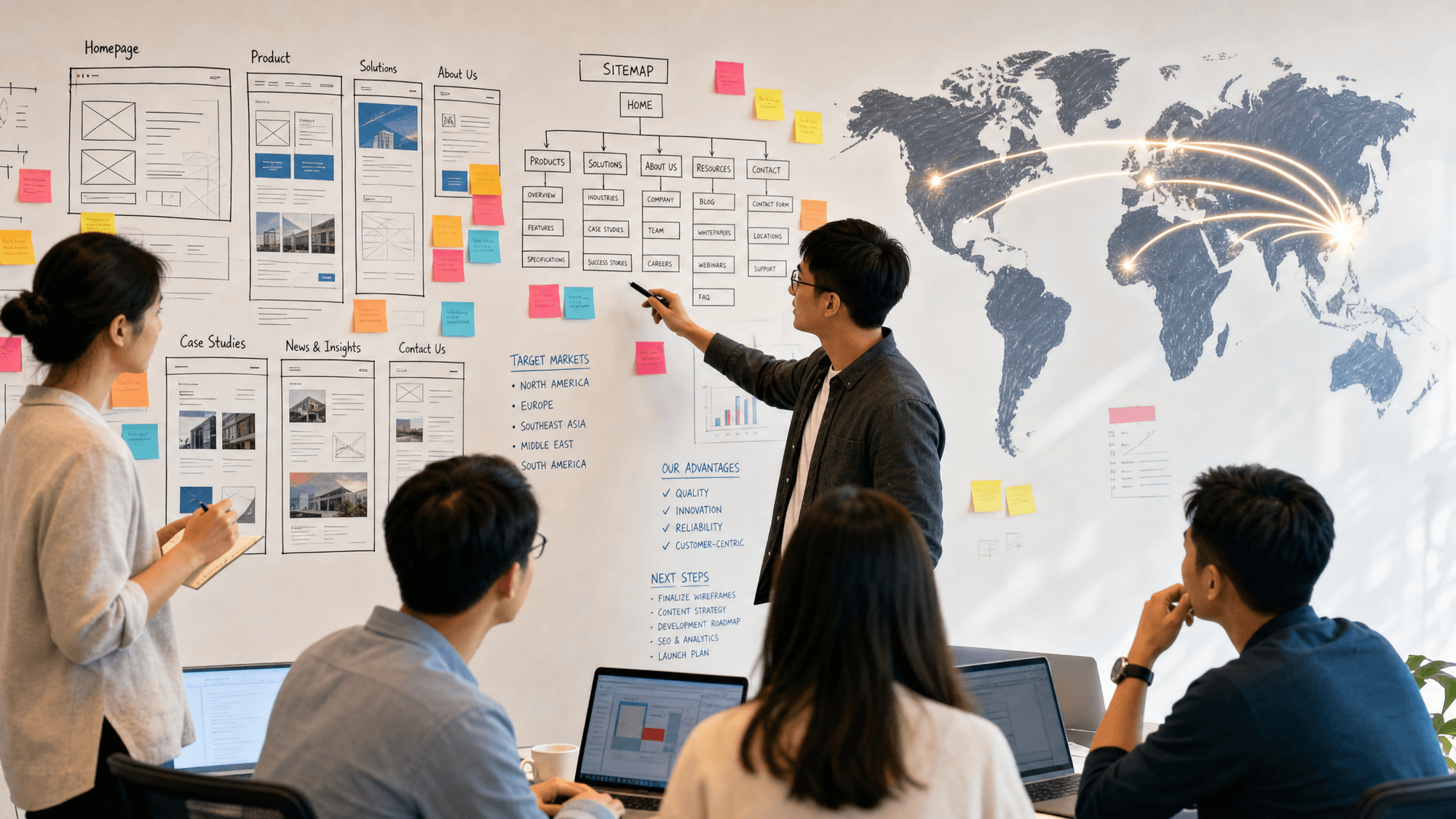
A website starts with what you say, who you say it to, and the order you say it in. We interview your team in Chinese, then write every page in native English for the buyer in Chicago or Munich.
Content→Design→Build
Get the words right and every dollar after it works harder.
Most agencies start with the design. That is the part most companies should do last.
Why it comes first
People assume a website starts with a designer. It does not. It starts with content, which is just a plain word for what you say and the order you say it in. A good-looking site built on weak content does not sell.
This matters more now than it did two years ago. AI tools read and rank websites today. They decide whether you even show up when a buyer searches, then whether the buyer trusts what they find. Most of our clients come to us with nothing ready: no clear message, no page plan, no English copy that reads like a human wrote it. That is fine. You build products and run a business. Writing for a buyer in Chicago or Munich is a different skill, and it happens to be ours.

What content actually means
Content is not just the text on a page. It is the whole story the site tells. Miss any one of these and the buyer is gone before your second paragraph loads.
One plain line, not a company history that opens in 2009. If the buyer cannot say what you sell after the first sentence, they are already gone.

A Western buyer has never heard of you, cannot read your Chinese certifications, and does not know your domestic clients. You start from zero and rebuild trust in terms they recognize: Western client logos, real numbers, photos of the actual people and the actual factory.
One clear action. Book a call. Request a quote. See the catalog. Miss any one of these three and the buyer is gone before your second paragraph loads.
We talk to you in Chinese
We ask the questions a Western buyer would ask, then dig out the real story, usually buried under modesty and technical detail. One client kept describing their main advantage as "normal," almost waving it off. To a Western buyer it was anything but. It ended up running across the top of their homepage.
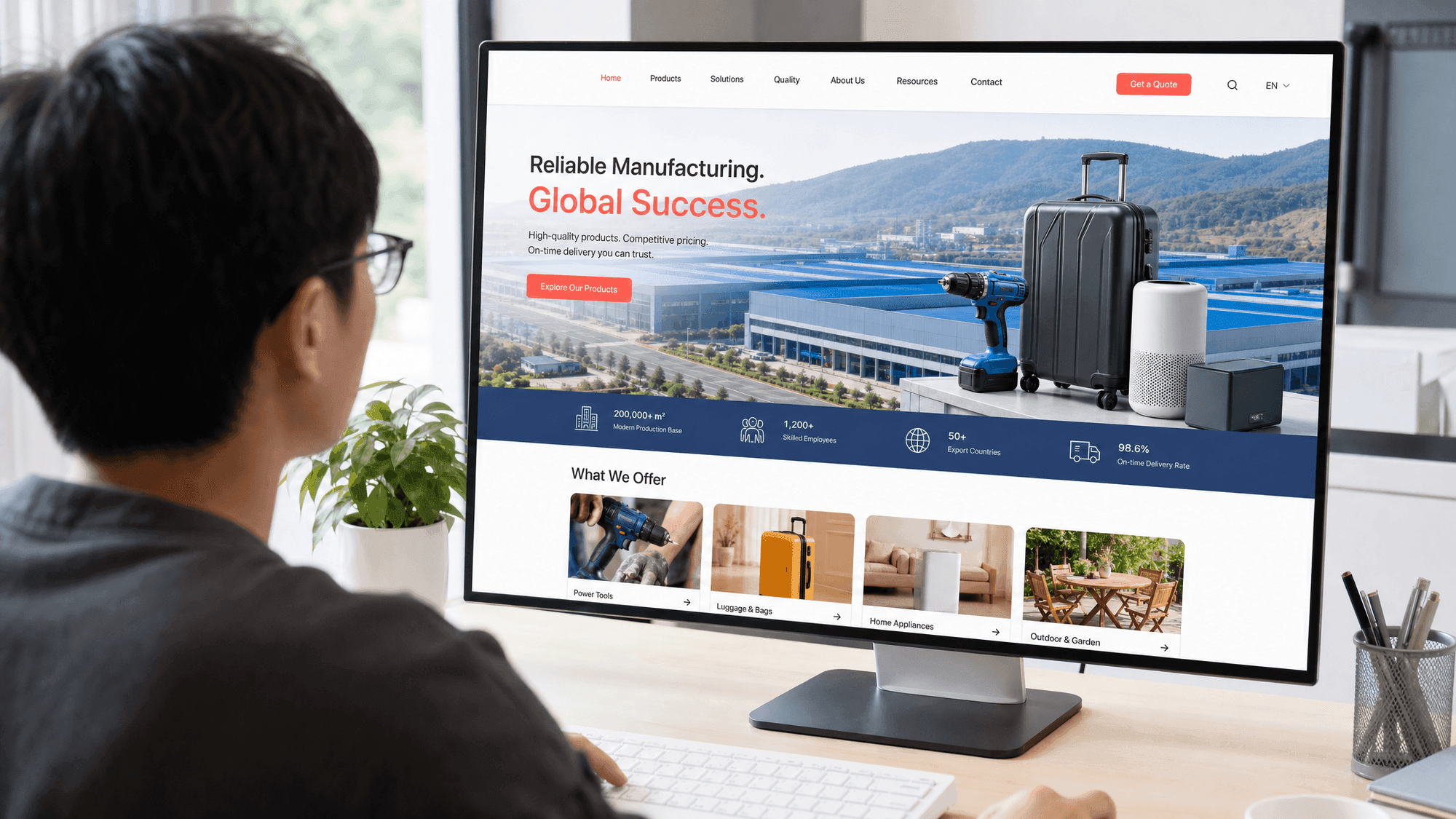
Why search changed the stakes
Tools like ChatGPT, Perplexity, and Google's AI summaries now read your site and answer the buyer directly, often before they ever click. They quote clear, well-structured content and skip the cluttered stuff.
Strong content pulls double duty. It convinces the person reading the page, and it feeds the machine deciding whether to recommend you. Your ads convert better because the landing page makes sense. Your SEO holds up because the writing is actually about something. Same money, more out of it.
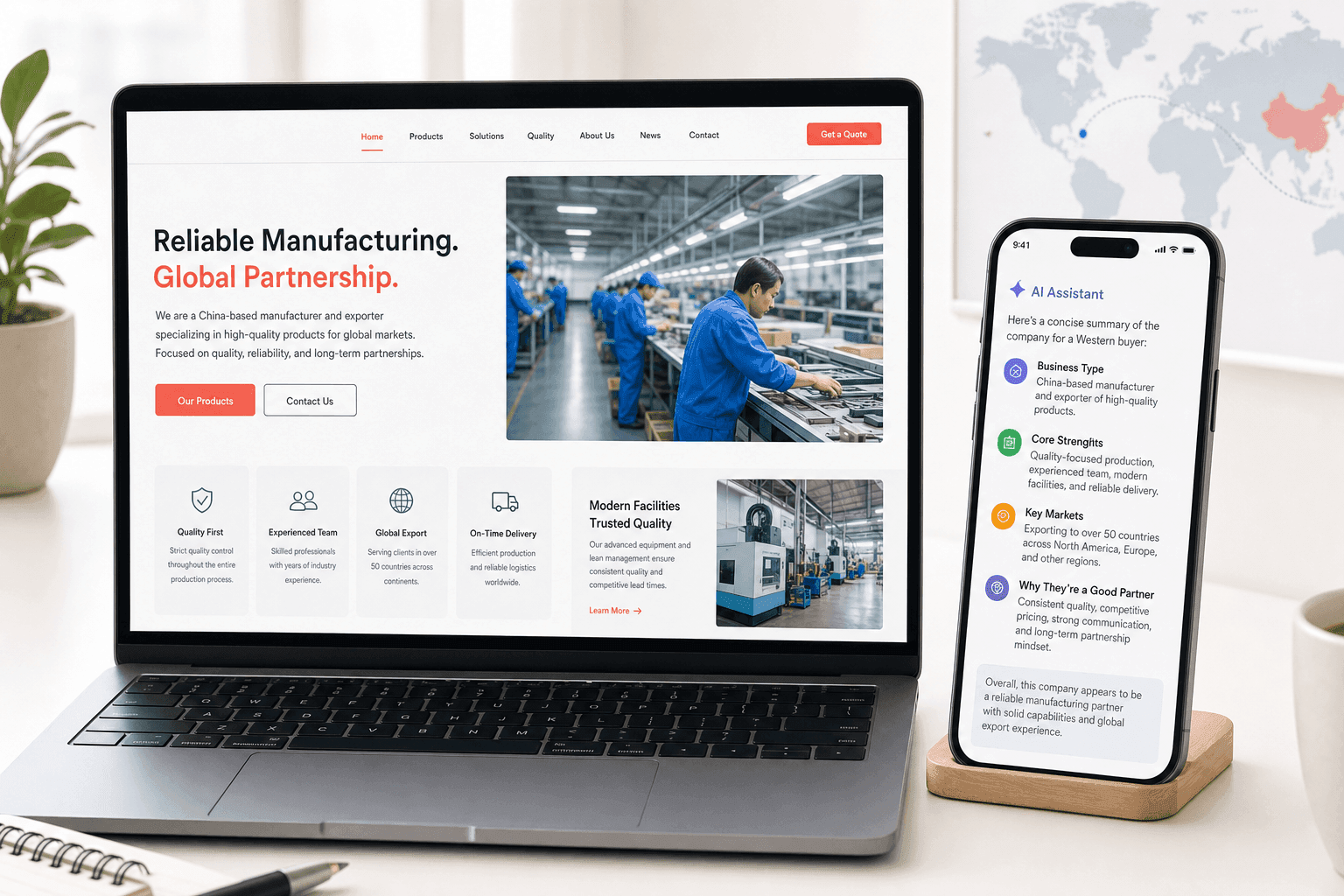 Written for the reader and the machine
 How the work goes
We sit down with the people who know the business: the founder, the sales staff who hear what buyers ask all day, the engineers who can tell you why the product is good once you get them talking.
We work out which pages you need and what each one carries, set the core message, then write every page in English from scratch. Nothing ever goes near a translation tool.
You read every page and mark it up, we adjust, and nothing publishes without your sign-off. Good content is rarely a straight line, and we would rather get it right than get it fast.
What you end up with
What lands
Ready for the human reading it, and the AI quietly deciding whether to mention you.
We will not pretend a website is one number. Content for a focused marketing site of five to ten pages is a smaller project than a full product catalog with an article program behind it. Most content engagements start in the low five figures RMB and scale with page count and depth. We give you the real figure on a call, once we know what you are building.
FAQ
It depends on your size and how many pages you need. A small site is a modest project. Book a call and we will give you a real figure, not a vague range.
Our writers work in English every day for Western markets, so nothing ever goes near a translation tool.
We could, but honestly you should not want us to. A straight translation reads as foreign, and a buyer feels that even if they cannot say why. We rewrite for the Western reader from scratch.
Not at all. Most clients start exactly there. It is the whole reason the first step is an interview in Chinese, not a blank page we hand you.
We do all the talking with you in Chinese. The website itself is written in native English.
Usually one to three calls, depending on how many products and services you have.
The people who know the business best. Often the founder, a sales lead, and someone from product.
Common with factories, and we are used to it. We ask the right questions and turn the technical detail into language a buyer follows.
Depends on the business. Most companies start with five to ten and grow from there. We work it out together.
Yes. Articles help you rank and get cited by AI tools. We plan and write them as part of your content.
Yes. Clear product and service pages a Western buyer reads fast.
You can. We can build the site so your team makes changes, and we offer ongoing help if you would rather not.
That is the whole point of writing it the way we do. Clear structure and the right words help Google rank you and help AI tools quote you. The article program is a big part of how that happens.
Yes. English first, then German, French, or others as you need them.
You review every page. We send drafts, you mark them up, we adjust. Nothing publishes without your sign-off.
Content sets the message. Next it gets a design and UX Western buyers trust, built on the right technology. The whole pipeline pulls from the same words.
Start here
The first conversation is in Chinese. You talk about your business. We turn it into pages a Western buyer reads and believes.
We pick up in your market's time zone.
Reviewed May 2026
Next module: Design and UX