

Skip to content
Beyond Bridge
A Chinese developer building a Chinese export brand's English website, code on one monitor and a vivid live preview on another

The technology module

The right tool for
the goal.

Never the one that is easiest for us.

There is no single best technology for a website. A wrong choice here is the kind of mistake you live with for years. So we open every build with one question, because the answer settles most of what follows.

The question that decides it

GoalToolBuild

Leads from a marketing site, or products sold online? Two different machines.

The business decides the tool, not the other way around.

One question first

Do you need a marketing website that brings in leads, or do you need to sell products online? Those are two different machines, built from different parts.

We pick the tool that fits your goal, never the one that happens to be easiest for us. Most companies come to us for the first kind: a site that shows what you do, earns a Western buyer's trust, and nudges them to get in touch. No shopping cart, just clear pages and a way to capture the lead.

A laptop showing a fast-loading clean marketing website with a strong headline and a single lead-capture button
Path one: a marketing site that brings in leads.

Path one: a marketing site

Two tools that pull in opposite directions.

Built for speed

Astro.

Pages load almost the instant someone clicks.

Speed turns into money two ways: visitors abandon slow sites before the page finishes drawing, and Google hands better rankings to the faster of two similar sites. The trade-off is that Astro is a developer tool. When you want to change something, you come to us rather than editing it yourself.
Built for control

WordPress.

Your own team logs in and posts without involving anyone.

Its whole appeal is that your team can post a news item, swap a photo, or update a price on their own. What it costs you is speed and upkeep: WordPress is slower out of the box, and it runs on plugins that have to be patched regularly or they turn into a security hole. We can carry that maintenance, but the work does not vanish.

Why speed is not cosmetic

Google has treated page speed as a ranking factor since 2021. The gap between a one-second site and a sluggish one is not about looks. It shows up in where you rank, and in how many visitors stay long enough to become leads.

In plain terms: if your priority is the fastest site and the strongest shot at ranking, we lean Astro. If you know your team will be in there every week, WordPress earns its place.

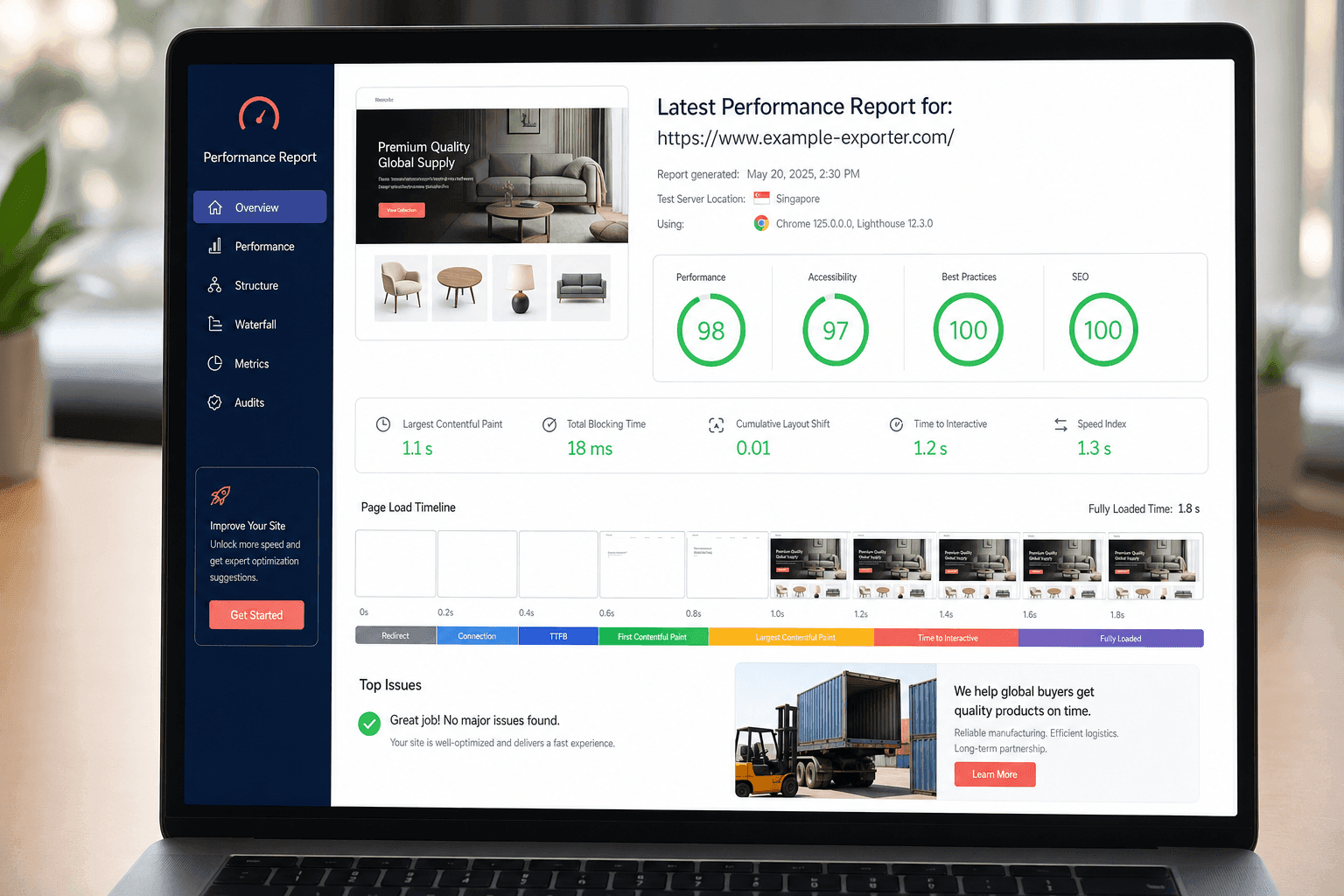
A screen showing a website performance report with green circular speed score gauges near 100 and a fast load timeline Fast is a feature, not a finish

Path two: an online store

Selling online changes the ground under your feet.

First you need to know what kind of store you are running. Selling to other businesses, often with account logins, bulk orders, and pricing that changes by customer, is a different build from selling to consumers at one fixed price with a simple checkout. The trade calls the first B2B and the second B2C. Plenty of Chinese exporters need both at once, which is fine. It just shapes the tool we choose.

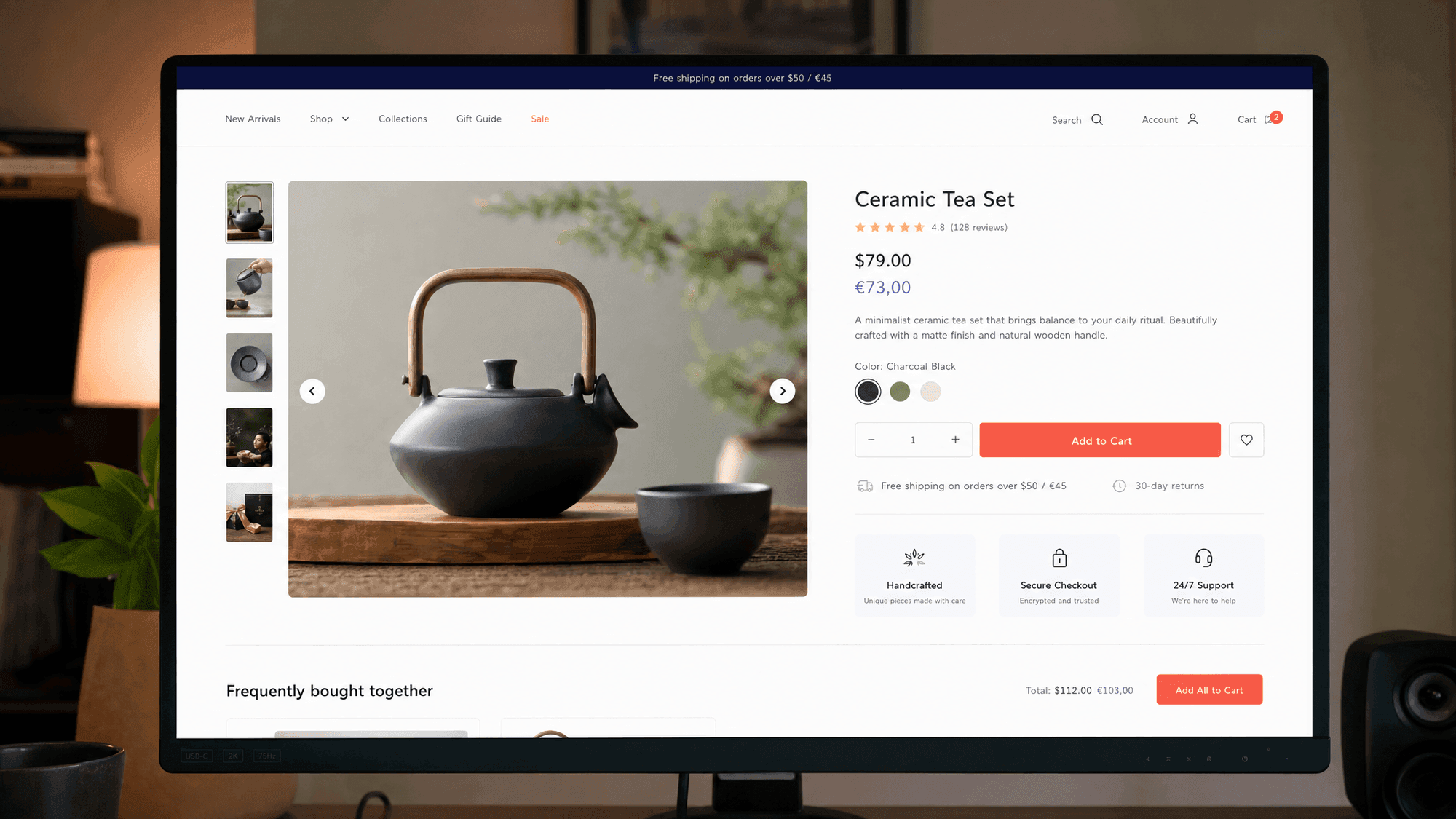
A monitor showing a modern e-commerce product page with a clean product photo, price and add-to-cart button beside a simple checkout
A store is a bigger machine. We size the tool to the catalog, not the other way around.
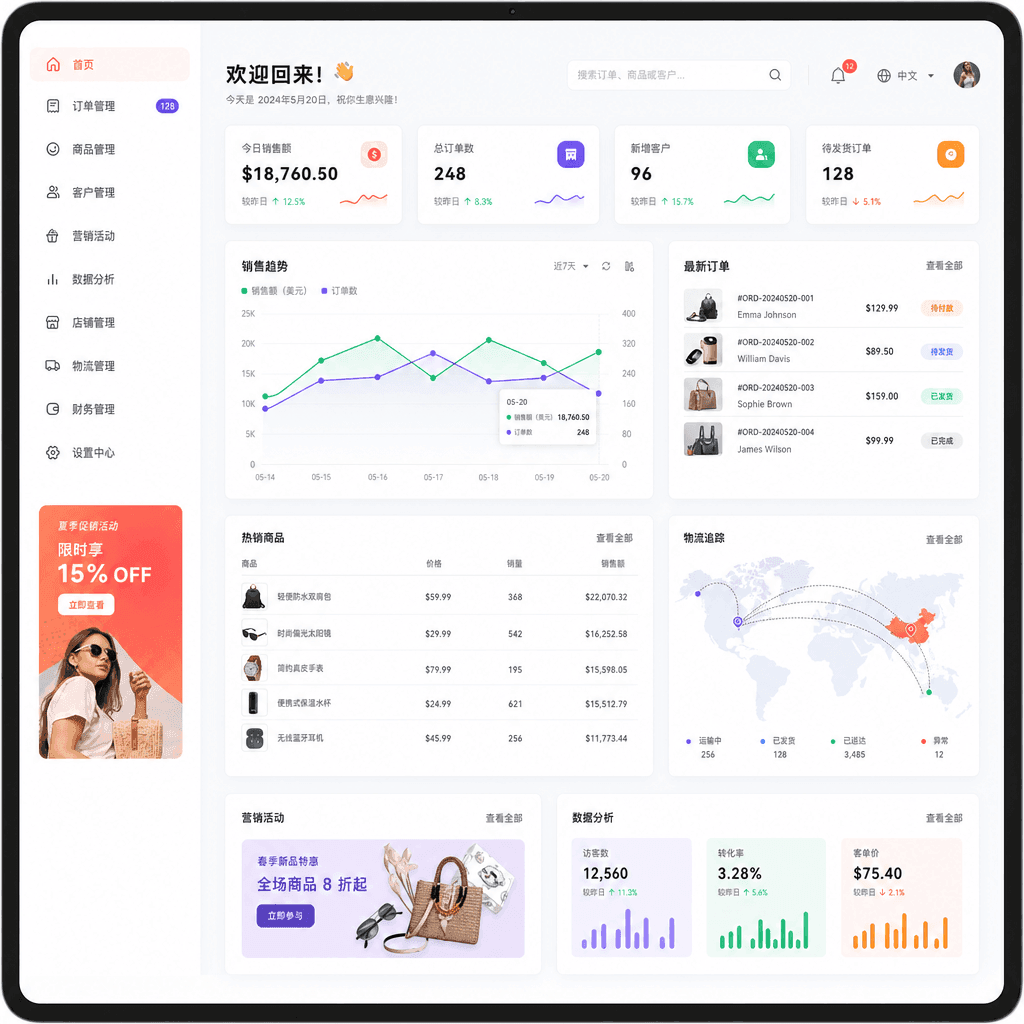
A friendly, colorful online-store admin dashboard showing orders and a bright sales chart

Shopify

The quickest way to get selling.

Reliable, familiar to Western shoppers, and it stands up fast. It handles both B2B and B2C without much fuss. For most companies opening a first store overseas, it is the sensible place to start, the option that gets you live and taking orders soonest.

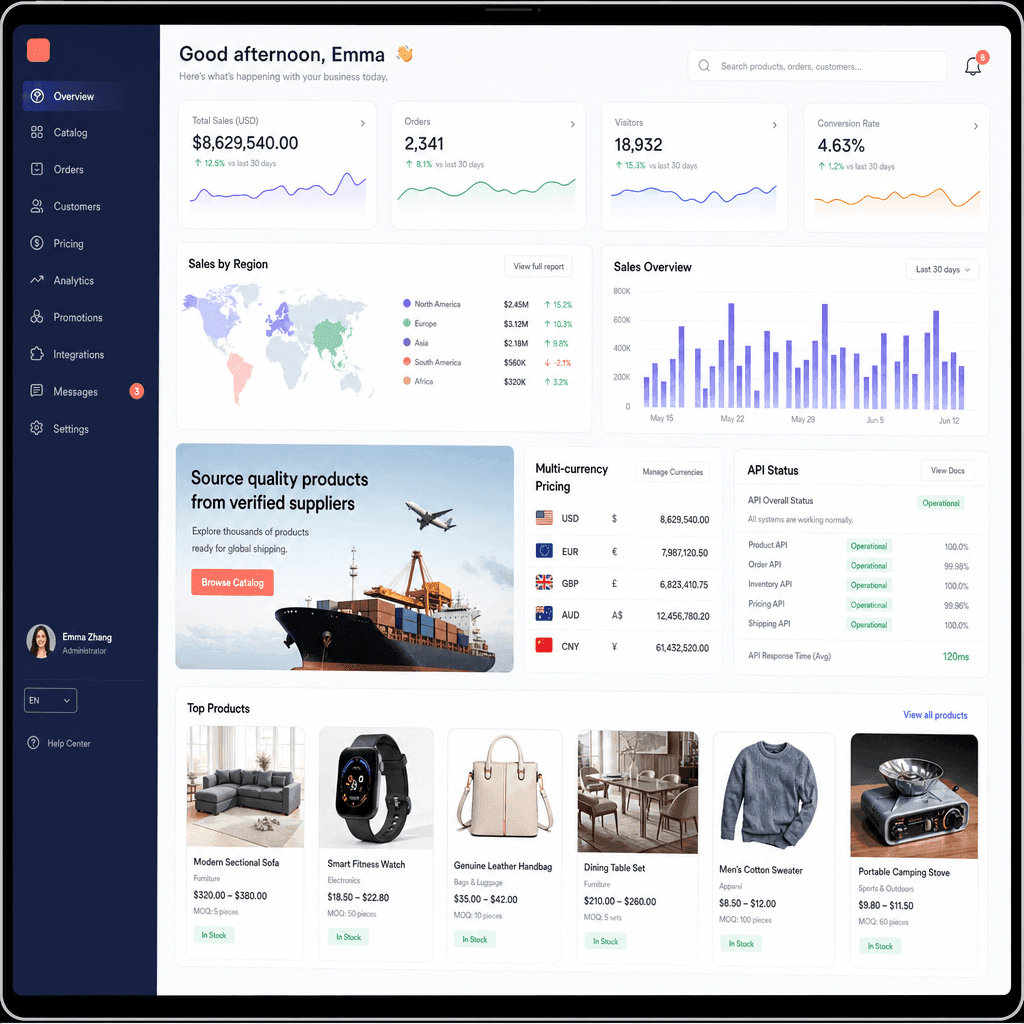
A sophisticated modern commerce dashboard with colorful data panels and product catalog cards

Saleor

For the harder cases.

Large catalogs, pricing rules that bend in odd ways, or a store that has to plug into systems a packaged platform cannot reach. Built on modern, open technology, it works cleanly with the AI tools that increasingly read and recommend products. It asks for more development up front, and gives you flexibility and headroom in return.

We choose here the way we choose on path one. If the goal is to get selling quickly without a heavy build, Shopify is usually the answer. Once you are dealing with a big catalog or pricing rules that do not fit a standard box, and you expect real growth, Saleor starts to pay for itself.

Why your home platforms stay home

The platforms that serve you in China do not travel.

Two reasons. Western buyers do not recognize those platforms, so they read as foreign and chip away at trust. And anything hosted behind the Great Firewall tends to crawl once the traffic crosses out of the country, which costs you the buyer before they have read a word. So we build on technology that is fast, trusted in your target market, and unremarkable in the way that matters, meaning nothing about it makes the buyer hesitate.

A note on cost

We do not quote from a price list. We look at what you are building.

Technology cost comes down mostly to which path you are on and how much custom work it needs. A marketing site on WordPress or Astro is a contained, predictable project. An online store is a bigger undertaking, a Saleor build especially, and it tends to carry a monthly platform or hosting cost on top of the build.

Marketing site (Astro / WordPress) From low five figures RMB
Online store (Shopify) Higher, plus platform fee
Online store (Saleor) Custom build, scoped

FAQ

Questions, answered plainly.

What does the technology cost?

It depends on the path and how custom it is. A marketing site is contained and predictable. A store runs higher and carries a monthly platform cost. Book a call for a real figure.

Astro or WordPress, which should we pick?

If speed and ranking matter most, Astro. If your team needs to edit the site themselves often, WordPress. The deciding question is usually who will be updating the site, and we talk that through with you.

Which one is actually better for Google?

Astro, in most cases, because it is very fast and speed feeds ranking. A well-kept WordPress site still ranks fine. It just takes more ongoing care to get there.

We want to edit the site ourselves. What then?

WordPress is built for exactly that. Your team posts news and edits pages without a developer, and we train them at the start.

Why does speed matter so much?

Two reasons that both cost money. Buyers give up on slow sites, and Google ranks fast ones higher. Speed turns into traffic, and traffic turns into leads.

What is the difference between B2B and B2C?

B2B is selling to other businesses, often with logins and custom pricing. B2C is selling to ordinary consumers with a straightforward checkout.

We only want leads, not online sales. Do we need a store?

No, and most companies in your position do not. A marketing site on Astro or WordPress is plenty. Store technology only comes into the picture once you are taking orders and payment online.

What is Shopify?

The popular one. Reliable, quick to set up, familiar to Western shoppers, and a solid choice for most companies opening a first store overseas.

What is Saleor, and when do we need it?

Advanced store technology for big catalogs, complex pricing, or unusual requirements a standard store cannot handle. You reach for it when Shopify would box you in.

Can we start simple and upgrade later?

Yes, and we plan for it from day one, so growing later does not mean tearing the site down and starting again.

Will the site work with Google Ads and SEO?

Yes. Everything we build is made to work with search and ads, which is what feeds your lead pipeline in the first place.

Can we add a store to a marketing site down the line?

Yes. Tell us it is coming and we set things up so the store goes on later smoothly rather than as a rebuild.

Do we need to understand any of this ourselves?

Not at all. You bring the goal. We handle the technical choices and the build.

We already have an overseas site. Can you move it to better technology?

Often, yes. We look at what you have, work out what is worth keeping, and plan the move so you do not lose your content or your search rankings. We will tell you honestly if a rebuild is the smarter option.

How do we decide which path is right for us?

Book a call. We ask about your goals, your products, and who will run the site day to day. Then we recommend a path and walk you through the reasons.

Where the site physically lives, and why that has to be outside China, is its own subject on the hosting page. The words that fill any of this are covered under content.

Bring the goal

Even a half-formed one.

Bring your goal, and we will tell you which path fits and give you a clear sense of the work involved.

We pick up in your market's time zone.

Book a call

Reviewed May 2026

Next module: Hosting