








Markets/ United States
One language. Many channels.
The United States looks simpler than Europe because there is one language and one federal market. Then you find the state rules, the listing requirements, the liability exposure, and a distribution structure with layers that do not exist at home.
Who is thereOur own people in New York, Toronto and Montreal.
On the ground
Three posts, one continent.
North American distribution is run by region rather than by country, and several of the accounts worth having buy for both sides of the border. Our people sit where that buying actually happens.
New York
The east coast bench. Manufacturers reps, importers, and the national accounts large enough to take a category on their own.
Toronto
Canada is usually the easier first order: smaller volumes, lower liability exposure, and in most categories the same product spec as the United States.
Montreal
French labelling is law in Quebec rather than a courtesy. It is also where a Chinese exporter who already has a French file is suddenly ahead.
The route to the buyer
A layer you may not have met before.
American distribution has an intermediary tier that is unusual elsewhere, and understanding it changes who you should be approaching.
Manufacturers representatives
Independent commissioned agents who carry a portfolio of non-competing lines and hold the customer relationships. They do not take title to goods, and in many categories they decide whether you get in.
Master distributors
A wholesale tier that stocks and redistributes to smaller regional distributors. Reaching them is efficient, and it puts another margin in the chain.
National accounts
A small number of very large distributors and retailers can represent most of a category. Winning one changes your business, and their terms reflect that.
Direct and online
Some categories now go largely direct through marketplaces, which conflicts sharply with any physical distributor you appoint if the rules are not set first.
Which of these applies to your category is the first thing we work out. That is the market and channel map.
Before you can sell
Listings, labels, and liability.
The federal rules are only part of it. States add their own, and the liability environment is materially different from what most exporters are used to.
Safety listing
For most electrical products a recognised laboratory listing is what makes the product installable and insurable. Without it, distributors and contractors will not touch it.
Federal agency rules
Radio devices, medical products, food contact and children products each fall under their own agency, with their own registration and labeling.
State-level requirements
California in particular runs chemical warning and energy efficiency rules that function as national requirements in practice, because nobody makes a separate product for one state.
Product liability
Exposure is higher than in most markets, and your distributor will ask about insurance and indemnity early. Budget for it rather than being surprised by it.
Working out which of these apply to your product, what they cost and how long they take, is export readiness.
Trade shows
Big shows, and long distances between buyers.
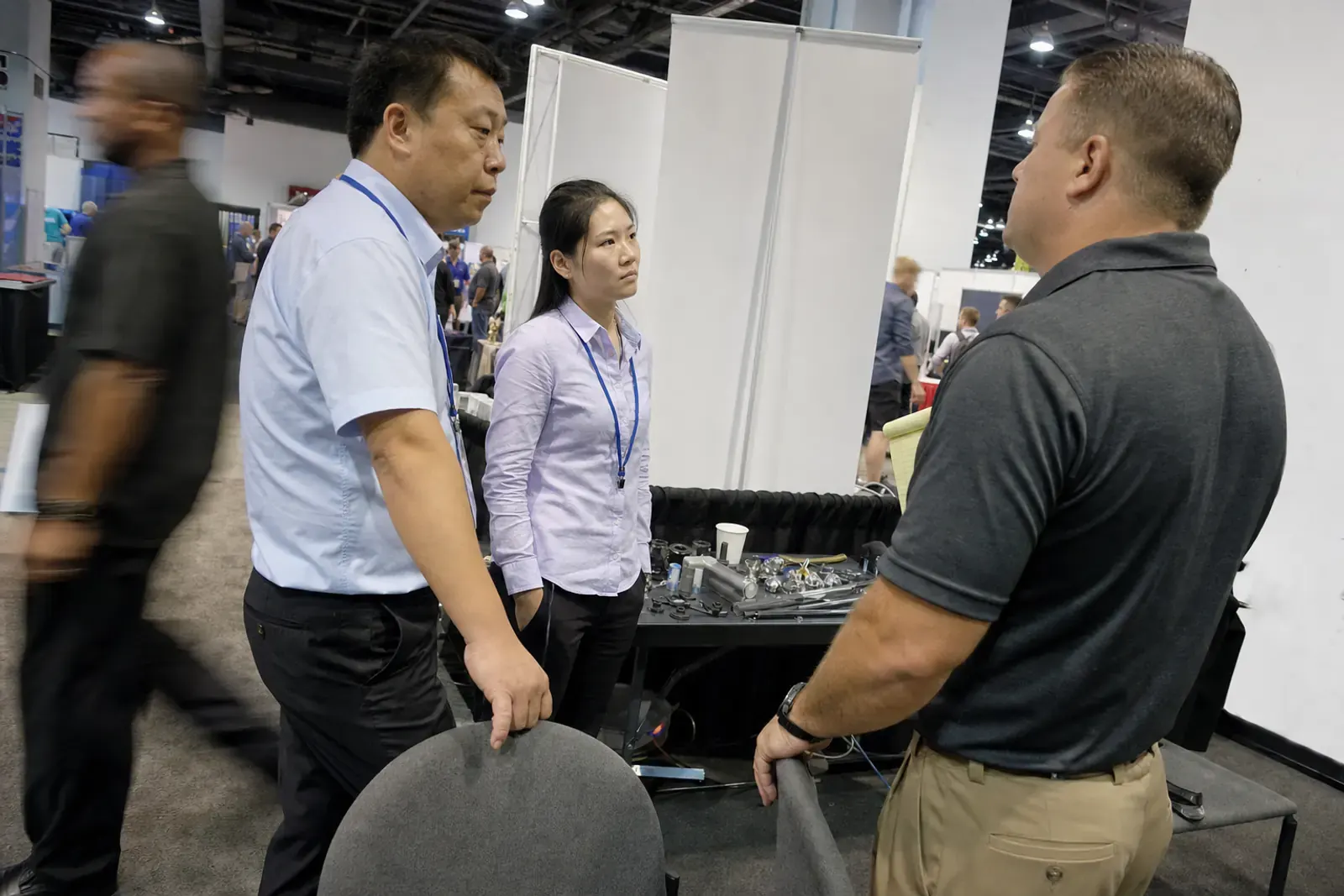
The major national shows draw the whole industry into one place, which is efficient when your category has one. Regional events matter more than exporters expect, because distribution is regional and a partner in the southeast may never attend a show on the west coast.
How we pick a showWhat we do here
Delivered, with local specialists, or on request.
No agency in this category publishes this. We would rather you knew before the first call than found out after the contract.
The first move
Is United States right for you?
This page describes the market. It deliberately does not tell you whether to enter it, because that answer depends on your product, your price and your capacity. Working it out properly is market selection.