

Someone on your stand who sounds local.
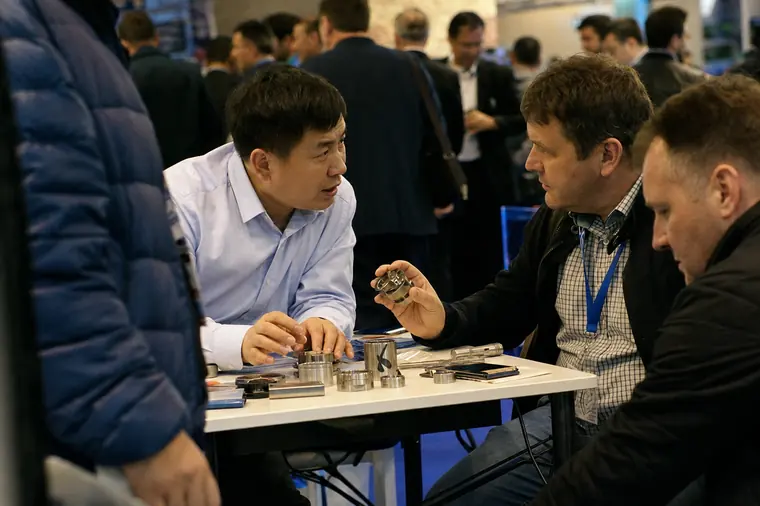
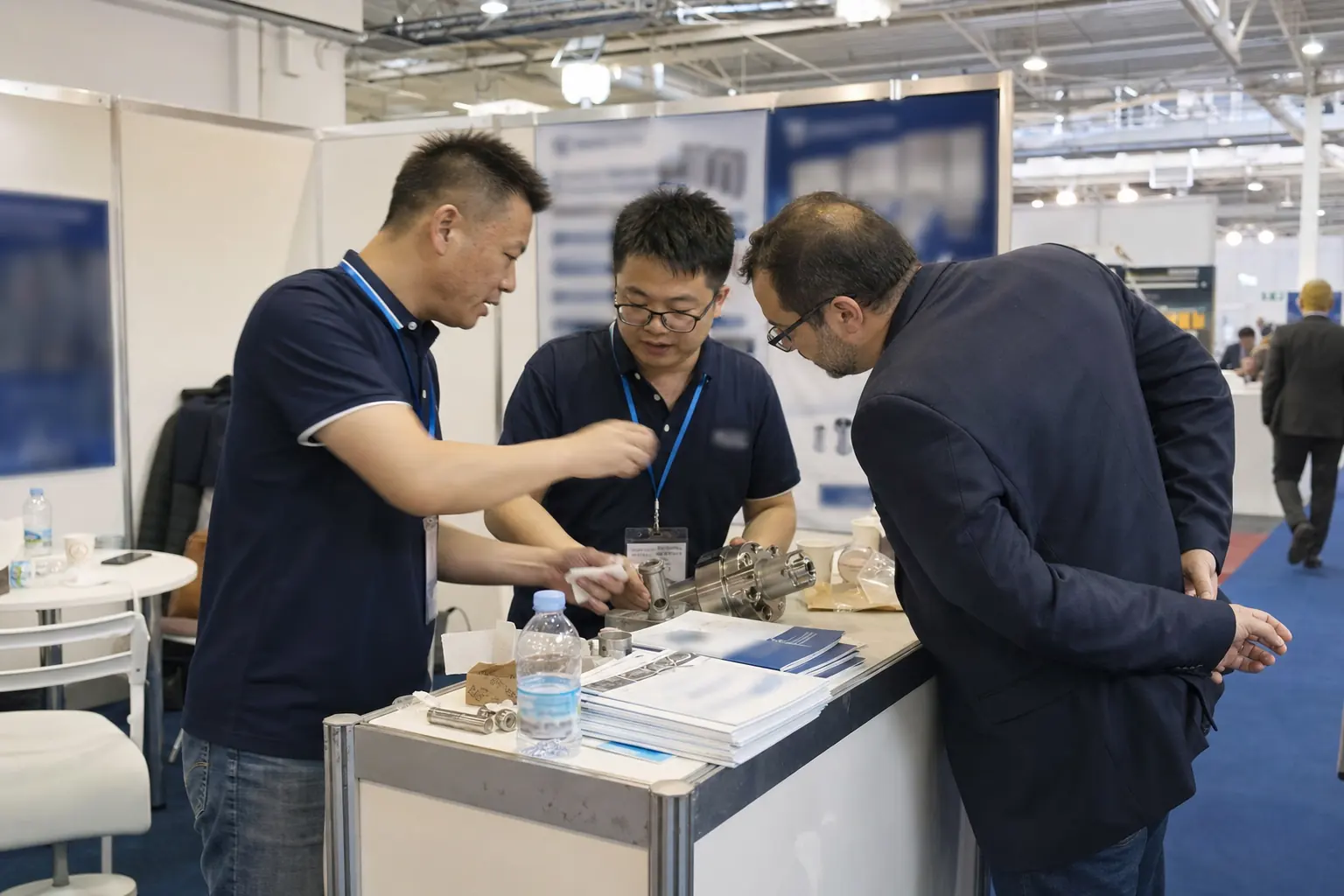
A European buyer walks up to a stand, is greeted in halting English, and moves on within twenty seconds. That happens hundreds of times over four days, and none of it appears in any report.
- Match
- Brief
- Work the stand
- Debrief
Native speakers who can qualify, not just greet.
Part of trade shows
The problem
The language gap costs you the visitors you paid to meet.
A buyer will not work hard to be understood. If the first thirty seconds are difficult, they walk, and you never know they were there.
The twenty second exit
They ask a question, the answer does not come easily, and they are gone before your engineer can help.
Everyone gets the same pitch
With no way to qualify quickly, your team spends equal time on a serious distributor and a student.
Nothing gets written down
Cards go in a pocket with no note of what was said. A week later nobody remembers who was who.
The honest part
Fluency is not the same as being able to sell in a language.
Qualifying a buyer in thirty seconds takes someone who hears the local signals: how they describe their business, what they do not say, whether they have authority.
- Technical English is not the same as commercial fluency in their language
- Buyers reveal their seriousness in small local cues you have to be native to catch
- Someone local can tell a real distributor from a broker in one question
- Your engineers are your strongest asset once the conversation is qualified, not before
What we do
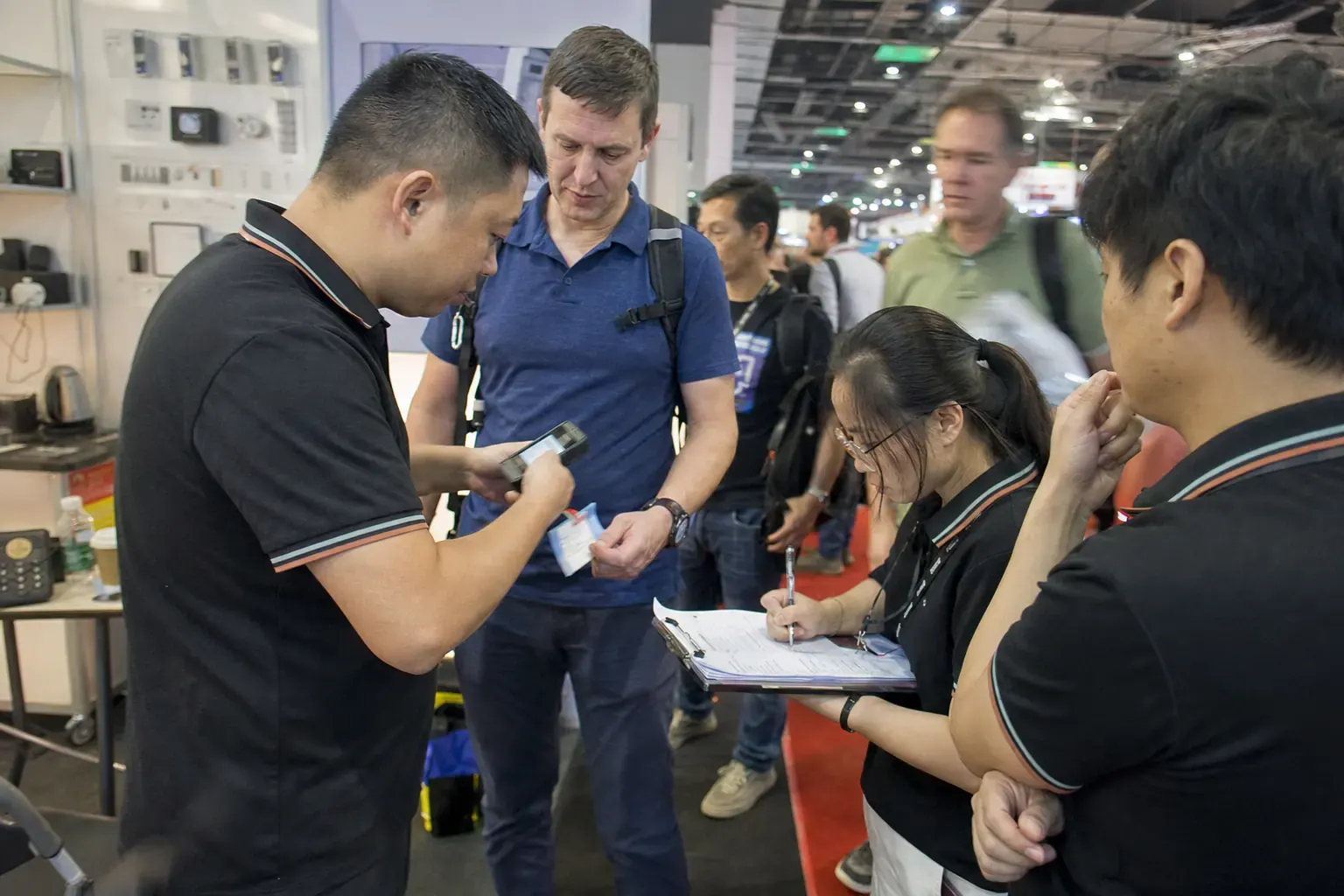
We put a local salesperson on your stand.
They are briefed on your product, your prices and your terms, and they work as part of your team for the show.
Qualify fast
A short conversation in their language that establishes who this is and whether they matter.
Hand over well
Serious visitors get passed to your engineers with the context already established.
Capture properly
Every worthwhile conversation recorded the same way, so follow-up is possible.
Read the floor
They tell you what they are hearing about your price and your competitors across the show.
How a round runs
Briefed before the show, on the stand throughout, debriefed after.
Staff who arrive on day one without preparation are receptionists. Ours are briefed properly beforehand.
Match
The right person for your category and market, agreed with you in advance.
Brief
Product, price, terms, competitors and the answers to the objections we expect.
Work the stand
Qualifying, handing over, and recording every conversation for the whole show.
Debrief
What was heard, who matters, and the ranked list that feeds the follow-up.
Half the people who stopped at our stand left within a minute. We assumed they were not interested. They could not understand us.
Questions
Answered plainly.
Not covered here?
Ask it on the call. If the honest answer is that this module is not what you need, we will say so and point you at the one that is.
Book a callThey are people we know and have worked with in that market, briefed and managed by us. You are not getting an agency temp who learned your product that morning.
They are commercial, not engineers. Their job is to qualify quickly and hand the real prospects to your technical team with the context already there.
It depends on your stand size and the show. Usually one or two alongside your own team is enough to change the outcome.
They can, and it works well because they were in the conversation. That is the post-show follow-up module.
Also in trade shows
The rest of the work.
The first move
Who is on your stand?
Tell us the show, the market and your stand size. We will tell you who we would put there and what it would take.