








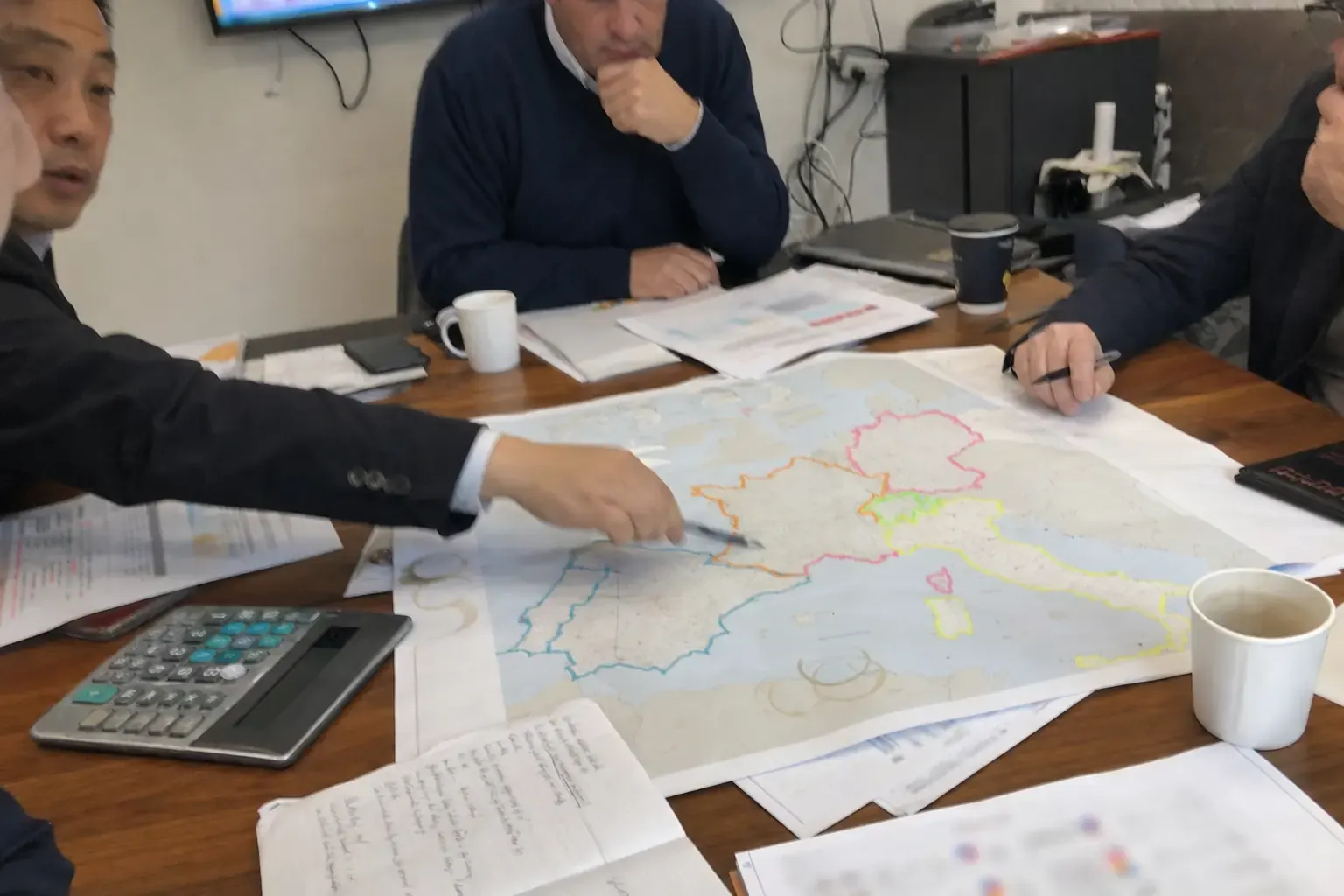
Write the rules before they cost you a distributor.
The first time two of your distributors bid against each other on the same job, one of them loses money and both of them lose trust in you. It is entirely avoidable, and almost nobody does it in advance.
- Map conflicts
- Draft
- Consult
- Issue
Agreed early, in writing, in both languages.
Part of channel management
The problem
Without rules, your distributors compete with each other instead of your competitors.
Price and territory conflict is the fastest way to lose a good distributor, and it usually starts with something small.
The same tender, twice
Two of your partners quote the same buyer. The buyer plays them off and both margins collapse.
The grey import
Someone buys cheaply in one country and sells into another, undercutting the distributor who did the work.
The online floor
One reseller lists at a low price online and every buyer in the region now treats that as your price.
The honest part
What you are allowed to enforce is not obvious, and it varies.
Setting the price your distributor resells at is restricted in many markets. Getting this wrong is a legal problem, not just a commercial one.
- Fixing a resale price is unlawful in much of Europe, while recommending one is not
- What you may restrict online differs sharply between markets
- Exclusive territories can raise competition issues depending on your share
- The enforceable version of a rule is often not the version you would prefer
What we do
Rules that are clear, fair, and actually enforceable.
We set out the commercial structure and flag anything that needs a local competition lawyer before it goes in a contract.
Territory
Who covers what, and whether it is exclusive, and what happens outside those lines.
Project registration
A first-come process for large jobs so two of your partners never chase the same buyer blind.
Price positioning
Recommended pricing and the discount structure, built so the chain still leaves everyone a margin.
Online
What may be listed, where, and by whom. The rule that protects every physical distributor you have.
How a round runs
One document, agreed with everyone who is bound by it.
Rules imposed by email get ignored. Rules discussed with your distributors before they are issued get followed.
Map conflicts
Where your current partners already overlap, and where they will as you grow.
Draft
Territory, registration, pricing, and online policy set out plainly in their language and yours.
Consult
We take it to your distributors, hear the objections, and adjust what is reasonable.
Issue
A final policy, checked locally, that everyone has seen before it takes effect.
Two of our distributors met on the same hospital tender. One of them had spent four months on it. He did not carry the line the following year.

Questions
Answered plainly.
Not covered here?
Ask it on the call. If the honest answer is that this module is not what you need, we will say so and point you at the one that is.
Book a callUsually not, and in Europe attempting it can be unlawful. You can recommend, you can control your own transfer price, and you can structure discounts. We work within that.
A simple process where a distributor tells you they are working on a named job and gets protection on it for a period. It is the single most effective way to stop channel conflict.
It is the best time. Rules written when there is nobody to upset are easy. Writing them after you appoint a second partner is a negotiation.
We shape the commercial rules and tell you what needs a local competition lawyer. We are not your law firm.
Also in channel management
The rest of the work.



The first move
Are your partners colliding?
Tell us who sells where today. We will tell you where the conflicts are coming and what a workable policy looks like.